If you are new to cooking with persimmons, you’ve come to the right place! This helpful guide covers everything you need to know about selecting, preparing, and using persimmons in sweet and savory recipes.
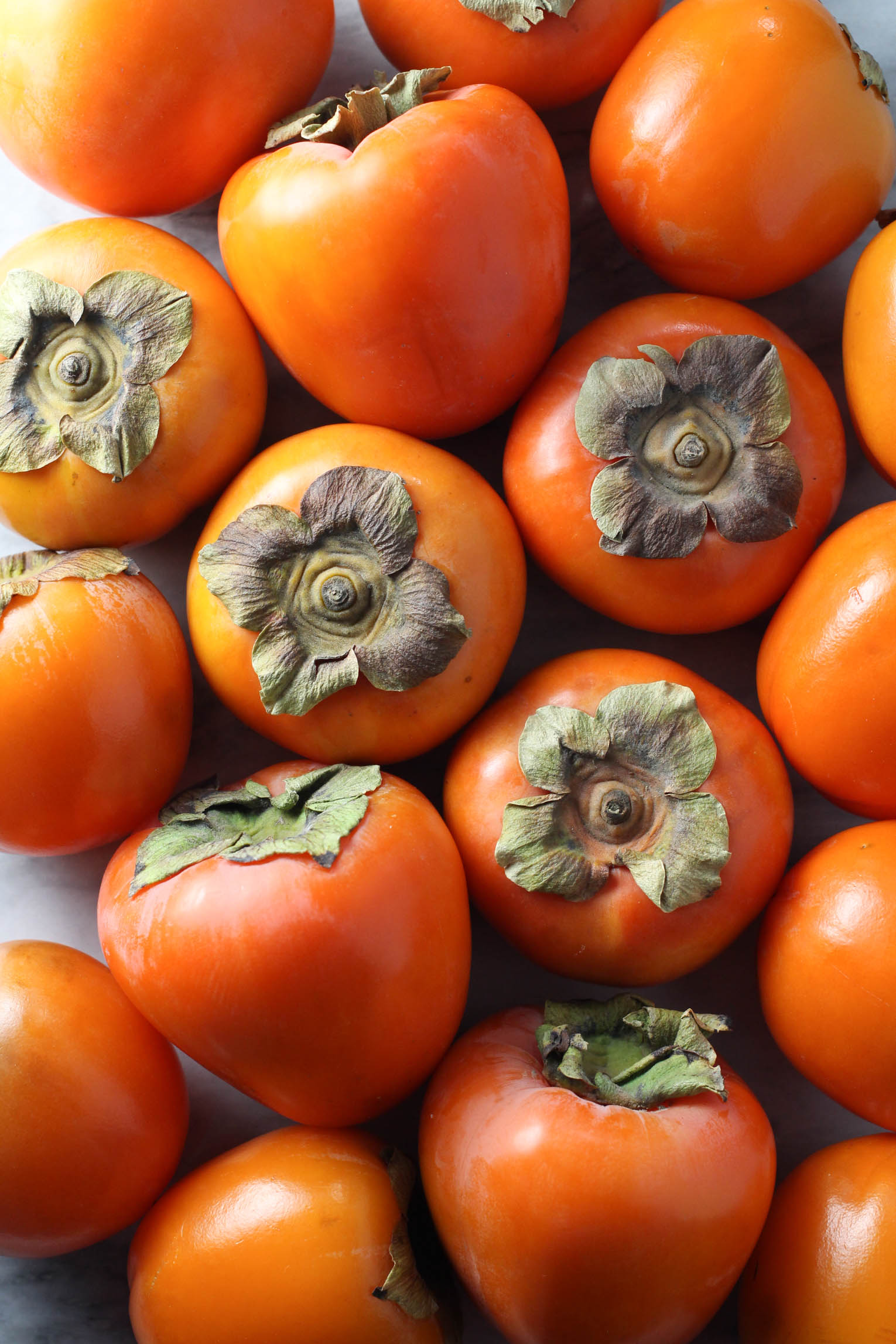
Have you ever bitten into a perfectly ripe persimmon? If not, you’re missing out on one of nature’s most delicious gifts.
This versatile, often-overlooked fruit is a hidden gem in the culinary world!
In this guide, we’ll explore the versatility of persimmons, from how to pick the perfect ones to how to use them in a myriad of sweet and savory dishes.
Get ready to be inspired by a world of mouthwatering persimmon possibilities!
What are Persimmons?
Persimmons are a fruit native to East Asia, particularly China, Japan, and Northeast India. However, nowadays, they can be found growing in all sorts of places, including the U.S. These bright orange beauties belong to the Diospyros family.
Persimmons are typically in season from late fall to early winter, making them a perfect addition to holiday meals.
With their sweet, honey-like flavor and smooth, custard-like texture, persimmons are perfect for snacking on fresh or using in your favorite autumn and holiday recipes.
Types and Varieties of Persimmons
There are many persimmon varieties around the world. Here are a few popular ones:
Non-Astringent Persimmons
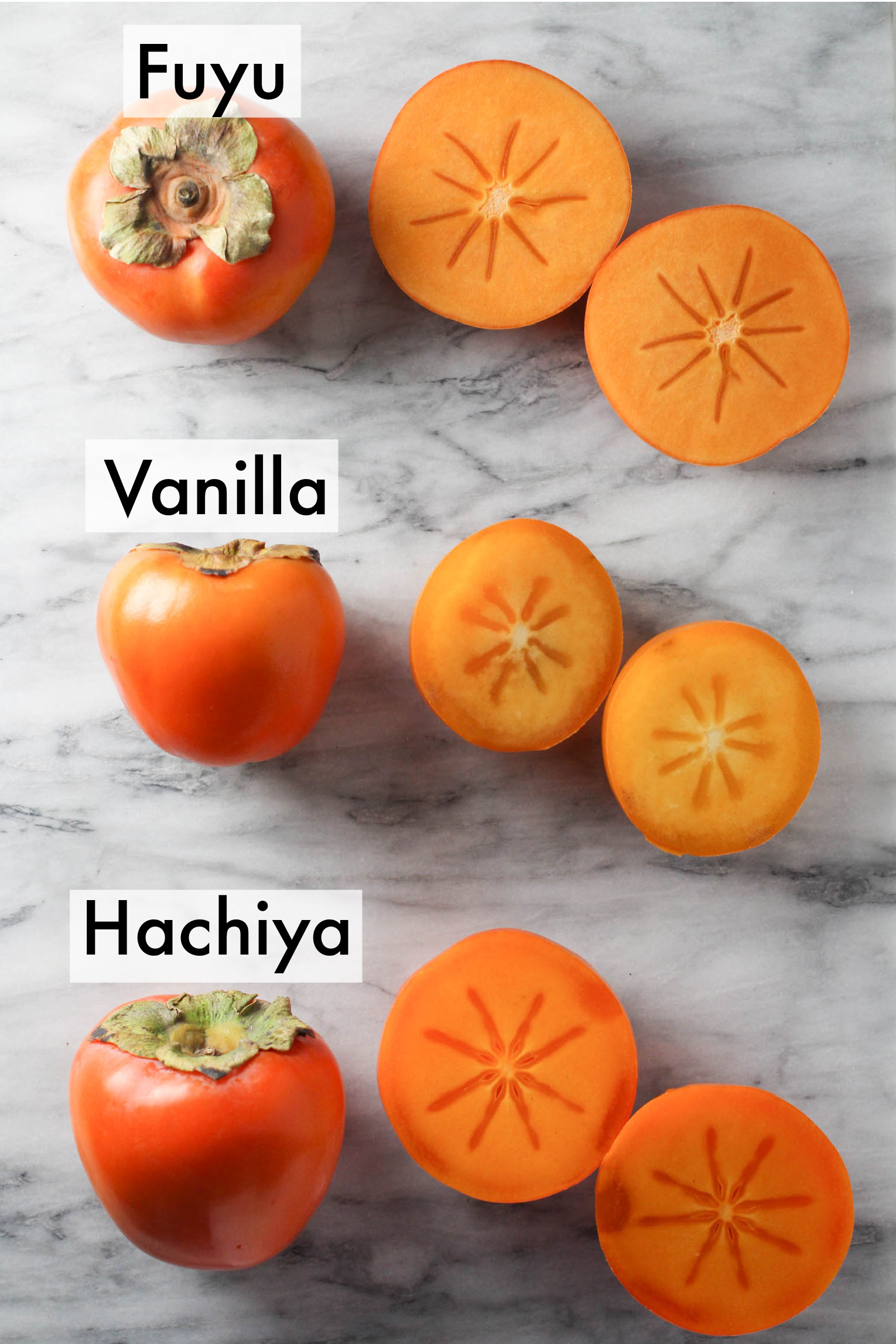
- Fuyu Persimmons —This is the most popular variety known for its firm, non-astringent flesh, and mildly sweet flavor. Crisp Fuyu persimmons are perfect for snacking, adding to salads and cheese boards, or using in baking. When ripe, their flesh is firm, crisp, and sweet, with a mild, honey-like flavor. Their versatility and pleasant sweetness make them a favorite for snacking and cooking.
- Vanilla Persimmons—Also known as Vanilla Kaki, Vanilla Persimmons are soft, creamy, and custard-like when ripe. They have a sweet, mild flavor with vanilla undertones and can be used in desserts, salads, and smoothies. This variety is prized for its delicate sweetness and smooth texture.
- PersiMon® —This trademarked persimmon variety is grown only in the Ribera del Xúquer Valley, near Valencia, Spain. Spanish PersiMon® is typically treated with a special process to ensure it is non-astringent and safe for consumption while still firm. This variety is known for its firm, crisp flesh and sweet vanilla-like flavor. Spanish Persimon® is often enjoyed in salads, desserts, or as a standalone snack.
- Sharon Fruit —Sharon fruit is a trademarked name that refers to the Triumph persimmon grown in Israel. These persimmons also go through specialized processing that removes the astringency typically found in the variety’s flesh. Sharon fruit is perfect for snacking. It can also be added to salads and cheese boards.
Astringent Persimmons
- Hachiya Persimmons—This astringent variety must be fully ripe before eating. Hachiya persimmons are large and acorn-shaped. When fully ripened, they have bright orange skin and soft, gelatinous flesh. The flavor is intensely sweet, rich, and honey-like, but the fruit must be fully softened to lose its astringency. Due to their astringent taste, they should not be eaten while firm. Ripe Hachiya persimmons are ideal for baking, blending into smoothies, or making purees and sauces.
How to Select and Store
When selecting ripe persimmons, look for fruits that are brightly colored and slightly soft to the touch.
For non-astringent varieties like Fuyu, choose ones that are firm but fully colored. Astringent varieties like Hachiya must be fully ripe and soft, almost squishy.
If your persimmons aren’t fully ripe, leave them at room temperature for a few days until they soften. You can speed up the ripening process by placing them in a paper bag with an apple or banana.
You can eat non-astringent varieties while firm, so they don’t need as much ripening time.
Once ripe, store persimmons in the refrigerator for up to a week.
You can also freeze them for later use in smoothies, baked goods, or as a frozen snack. Simply peel, slice, and freeze them in a single layer before transferring them to a freezer bag for easy access.
Prepping Persimmons for Cooking
For non-astringent varieties like Fuyu, you can eat the skin or gently peel it off with a vegetable peeler if you prefer.
For astringent varieties like Hachiya, it’s best to peel them completely once they’re soft. After peeling, slice the persimmons into wedges or cut them into cubes, depending on your recipe. If you’re using persimmons for baking, puree the fruit and drain as much moisture as possible.
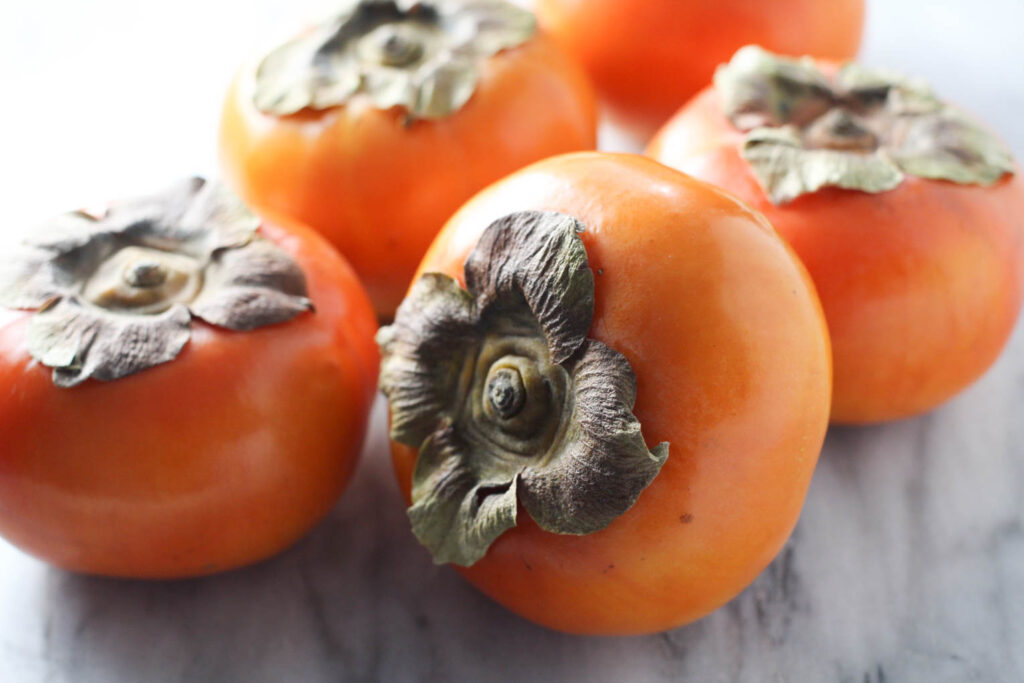
Sweet Persimmon Dishes
Persimmons have a distinct, honey-like sweetness that can elevate any sweet treat, such as:
- Fruit spreads – Their natural flavor shines in jams and jellies, offering a fun fruit spread for toast, English muffins, croissants, and more.
- Fruit salads – Persimmons are perfect for adding to fruit salads. Choose firm, non-astringent varieties to toss with your favorite fall and winter fruits for a refreshing snack or healthy dessert.
- Baked fruits – Just like apples or pears, you can also bake persimmons. You can either add them to a baked fruit medley or bake them on their own. Baked persimmons make a perfect winter dessert served with ice cream and you can also add them as a topping to yogurt parfaits or oatmeal.
- Pudding – Puree persimmons and incorporate the puree into your pudding mixture. This will give the pudding a rich, creamy consistency and fantastic fruity flavor.
- Baked goods – Try using pureed persimmons in your favorite muffins, cookies, quick breads, pies, or cakes. The soft, ripe fruit will only make them better.
- Pancakes/waffles – Dice ripe persimmons and gently toss them with a bit of honey or cinnamon to use as a sweet pancake or waffle, or fold them into the batter for extra sweetness and texture.
- Smoothie bowl – Blend ripe persimmons with your favorite frozen fruits, yogurt, and a splash of milk. For a satisfying, healthy breakfast, top with granola, nuts, seeds, and fresh fruit!
- Drinks – Persimmons are great in cocktails, mocktails, and even hot beverages. You can blend the fruit into smoothies, press it into juices, or muddle it with herbs for a fresh twist on your favorite drink recipes.
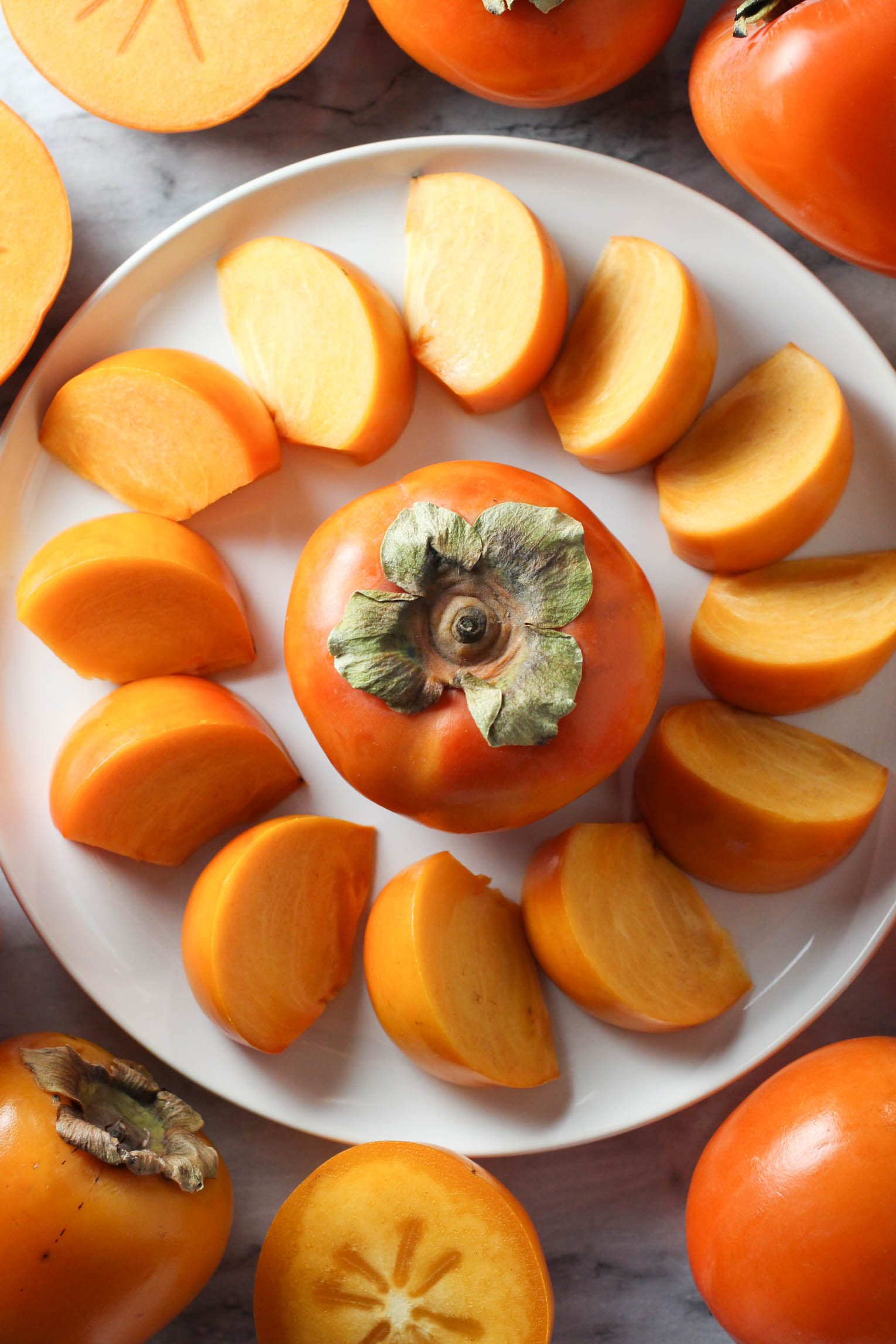
Savory Persimmon Dishes
While persimmons are often associated with sweet dishes, their natural sweetness and texture pair beautifully with rich, salty, and spicy flavors. Here are some ideas to try:
- Toss in salads – Try adding diced persimmons to salads for a burst of flavor and visually pleasing color. This Mixed Greens Salad or this Quinoa and Kale Salad is perfect for persimmons!
- Add to salsa – Incorporate them into salsas to complement grilled meats and fish, or your favorite taco recipes.
- Add to roasted veggies – They make an excellent addition to roasted vegetable dishes. Pair them with veggies that have a savory depth and caramelize slightly when roasted; think sweet potatoes, rutabaga, carrots, butternut squash, cauliflower, red onions, beets, and so on.
- Chutneys and glazes – You can even use them in savory chutneys or glazes, perfect for drizzling over pork, chicken, or roasted root vegetables.
Tips for Cooking with Persimmons
Didn’t find what you were looking for in the ideas listed above? Whether you’re craving something sweet or savory, these tips will help ensure a delicious dish:
- Balancing sweetness and tartness – To balance the sweetness, pair with tart ingredients like citrus, apple cider vinegar, or tangy cheeses (e.g., goat cheese or feta) in salads or salsas. A touch of spice like cinnamon or ginger can complement the natural sweetness and enhance the overall flavor.
- Pairing with other ingredients – Persimmons pair wonderfully with sweet ingredients like honey and maple syrup. They also go well with warm spices such as cinnamon, allspice, nutmeg, and cloves. Pair them with salty ingredients like prosciutto or bacon and fresh herbs like thyme or rosemary in savory dishes.
- Be careful not to overcook – Be mindful of cooking times, especially when baking or roasting persimmons. The fruit is delicate and can lose texture when overcooked. You want them to maintain their shape and vibrant color while softening nicely. The non-astringent varieties that are still firm when ripe are best for baking.
FAQ
Final Thoughts
Now that you’re more familiar with persimmons, it’s time to try them out for yourself!
Whether blending, baking, or simply snacking, there’s a persimmon dish for everyone. If you try one of these persimmon uses, I’d love to hear about it. Feel free to share your experiences and any new recipe ideas you come up with.
Happy cooking with persimmons!
Additional Culinary Guides
- What to Do with Leftover Apples
- How to Use Fresh Herbs in Cooking
- What to Do with Leftover Roasted Vegetables
- How to Use Quinoa for Breakfast, Lunch and Dinner
- How to Thicken Soup without Flour or Cornstarch

Meet Maria
Maria Ushakova is a holistic nutritionist and food blogger. She focuses on developing easy recipes using real food ingredients. She believes that healthy food is delicious and anyone can learn how to cook it. Maria’s work has appeared on numerous popular websites as well as in print.