Krautsalat (German Cabbage Salad) is a simple dish made with finely shredded cabbage and a bright oil-and-vinegar dressing. Fresh, tangy, and pleasantly crisp, it has just enough tenderness to let the flavors soak in while keeping its satisfying crunch.
It’s easy to prepare, holds up beautifully for days, and pairs perfectly with schnitzel, sausages, grilled meats, BBQ, or a classic Salatteller spread.
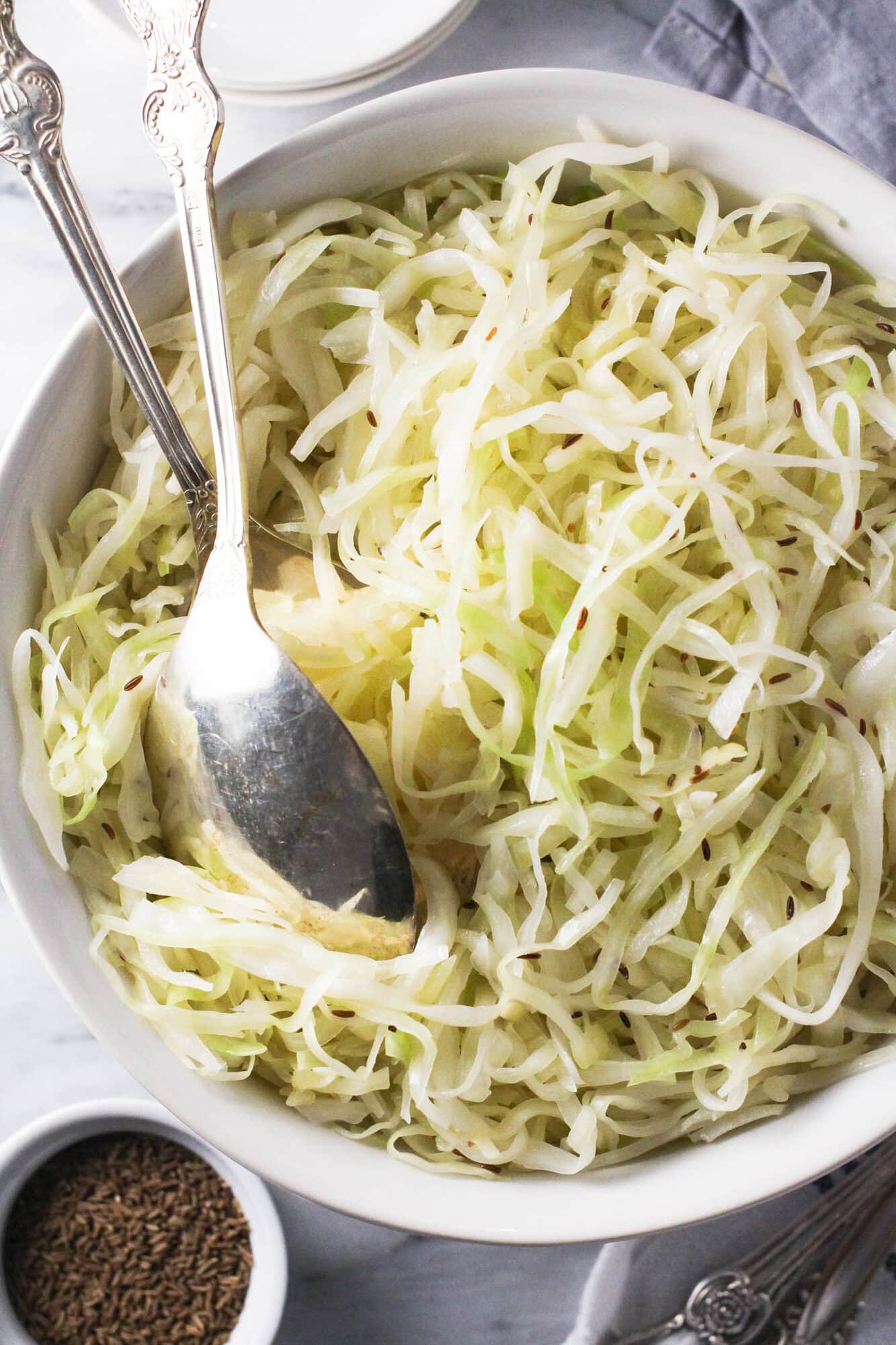
While mayo-based cabbage salads and slaws certainly have a time and a place, a good, mayo-free recipe is an any-meal-on-any-day kind of dish.
This German-style mayo-free coleslaw is one of my absolute favorites, and I have a feeling it’s about to become one of yours, too!
What is Krautsalat?
If you’ve ever found yourself at Munich Oktoberfest, you’ve likely encountered Krautsalat (pronounced KROWT-sa-lat), which literally translates to “cabbage salad.”
While its origins are deeply rooted in Central European farmhouse cooking, it has evolved into a true German staple.
Although it isn’t a long-fermented cabbage salad like sauerkraut, it is still a powerhouse for your health!
The traditional process of “salt-massaging” and the acidity from the simple vinegar-based dressing break down the tough cellulose fibers, creating a dish that is much easier on the digestive system than raw cabbage.
Unlike the chunky slaws we often see at North American picnics, traditional German krautsalat is defined by fine, delicate cabbage ribbons that feel light on the palate, especially alongside rich, savory meats, where the acidity cuts through the fats perfectly.
Now that we’ve covered the basics, let’s look at the simple, wholesome ingredients that bring this German classic to life.
Ingredient Notes
Here is everything you’ll need to make this traditional Krautsalat recipe:
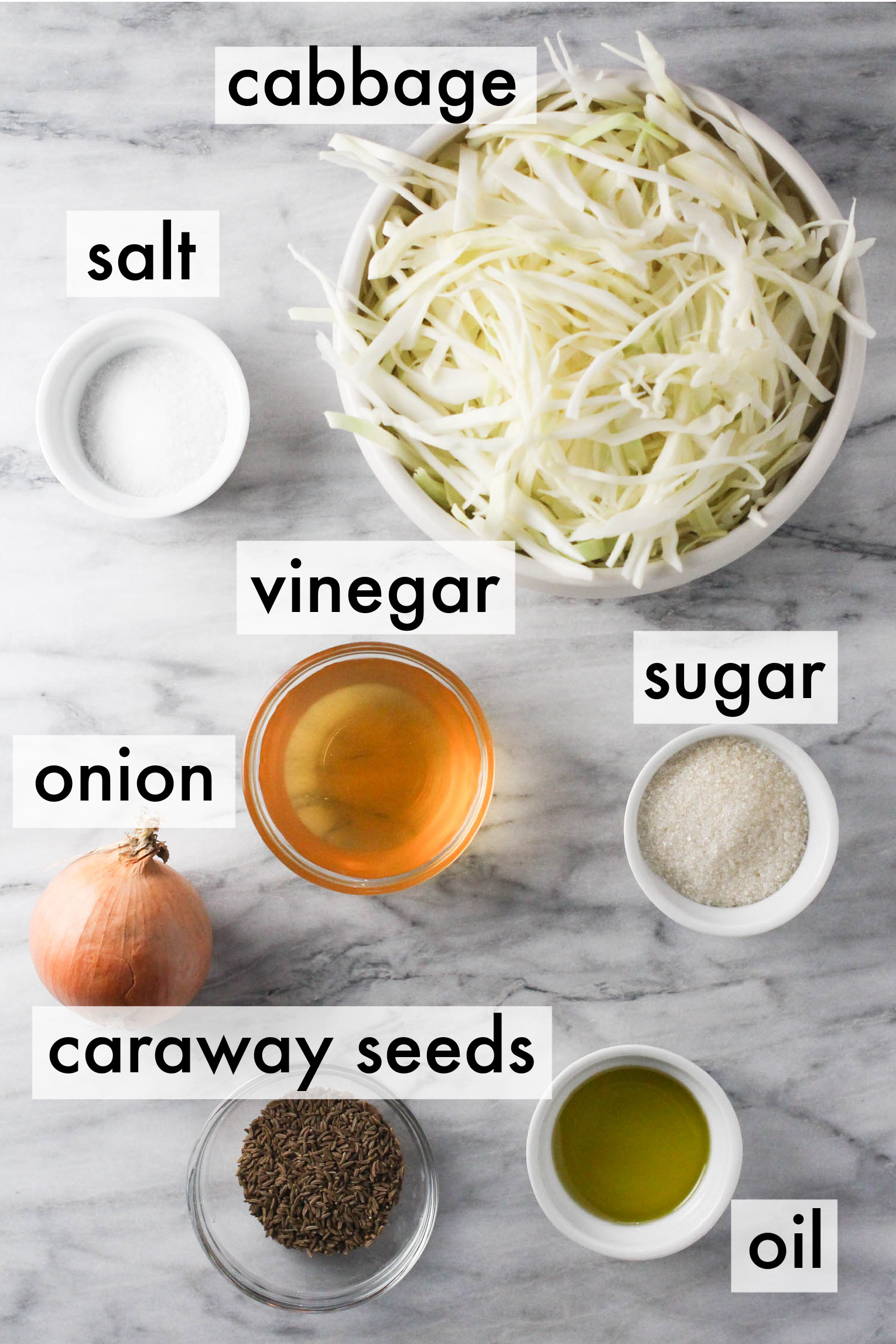
Each ingredient plays a specific role in balancing the crunch, acidity, and digestive benefits that make this the best mayo-free slaw you’ll ever experience:
- Cabbage – You can use regular white cabbage or green cabbage. Just do your best to find a fresh, small-to-medium-sized head that feels heavy for its size, as they’re usually more tender and have a milder, sweeter flavor than larger ones.
- Salt – Beyond flavor, salt draws out excess moisture, preventing the slaw from becoming limp and watery. Stick with fine sea salt or kosher salt here. Regular table salt has additives that can discolor your cabbage and ruin the crisp texture.
- Onion – I recommend using white or yellow onion here, and if you’re iffy about raw onion, don’t worry—once it’s tossed with the shredded cabbage and marinated, its pungent bite mellows out significantly.
- Caraway seeds – These warm, earthy seeds are a quintessential ingredient in authentic German cabbage salad.
- Vinegar – Vinegar brings the clean, sharp acidity needed to “cook” the cabbage and soften it without heat. I personally love high-quality raw apple cider vinegar for the slightly fruitier profile and probiotic boost, but white wine vinegar, champagne vinegar, or even rice vinegar work just as well here.
- Oil – To create the glossy, light dressing that defines a mayo-free slaw, you want a high-quality, neutral-tasting oil that won’t solidify in the fridge, such as sunflower, avocado, or a mild olive oil.
- Sugar – Traditionally, granulated sugar rounds out the dish’s signature sweet-and-sour profile, making it so addictive. If you’re looking for a more natural, low-glycemic option, use a touch of honey.
How to Make Authentic German Krautsalat
Authenticity isn’t just in the ingredients, but in following these step-by-step instructions so every bite is uniform, tender, and tasty:
Step 1: Shred the cabbage.
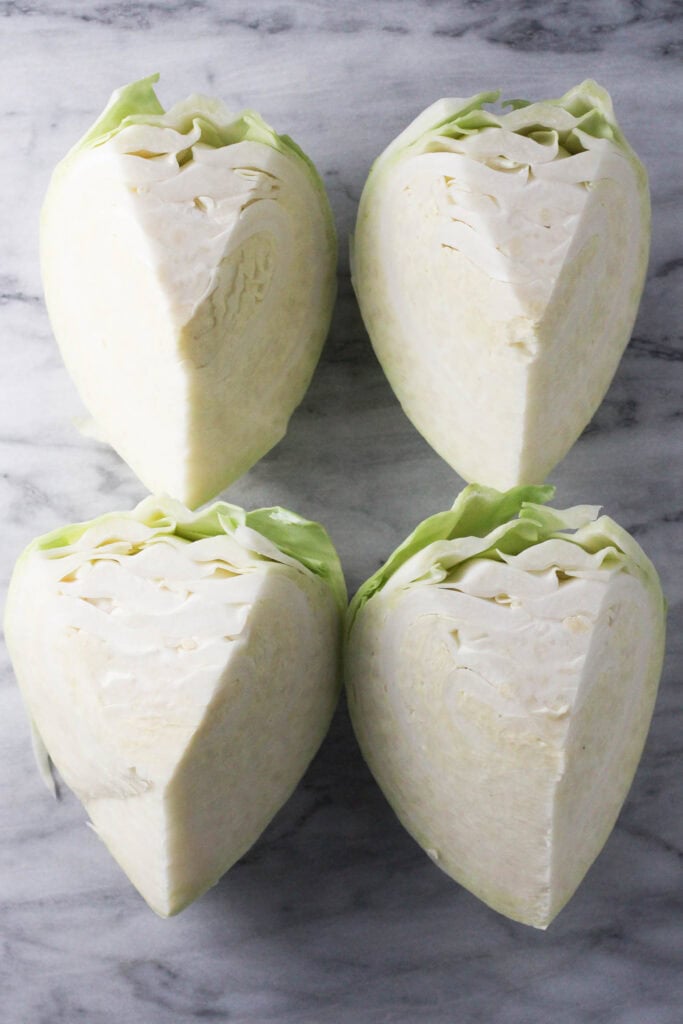
Start by removing and discarding any bruised or wilted outer leaves, then rinse the head under cold water and pat it dry.
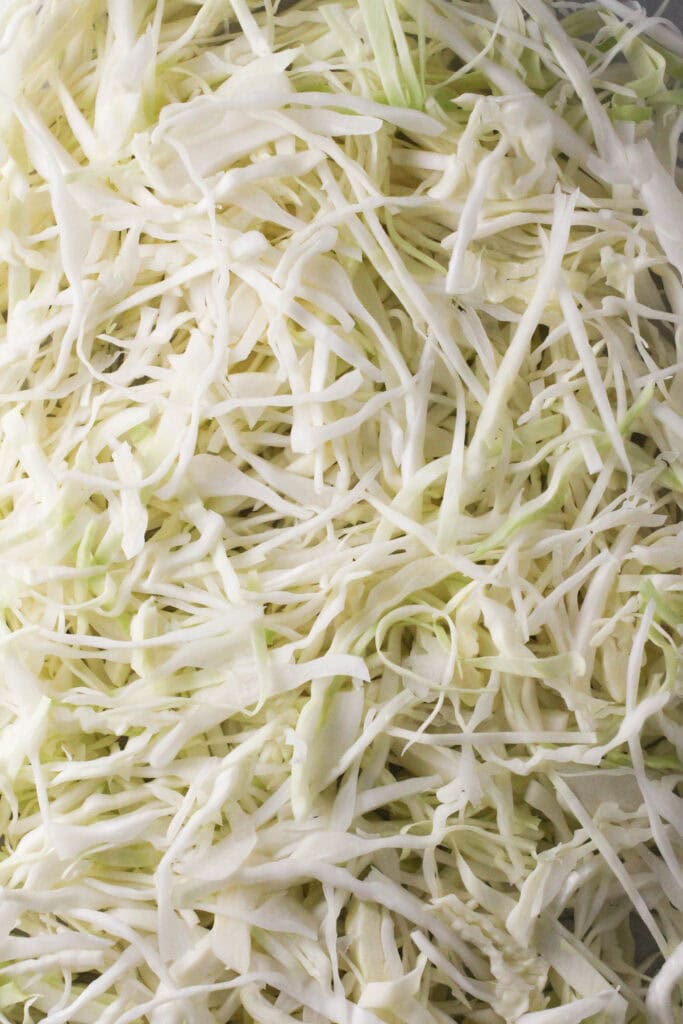
Use a sharp chef’s knife to slice the cabbage in half vertically through the stem. Lay the halves flat-side down and cut each half into quarters. Then, hold your knife at a 45-degree angle to remove the tough inner core from each wedge before slicing each one into paper-thin ribbons.
Step 2: Macerate and massage.
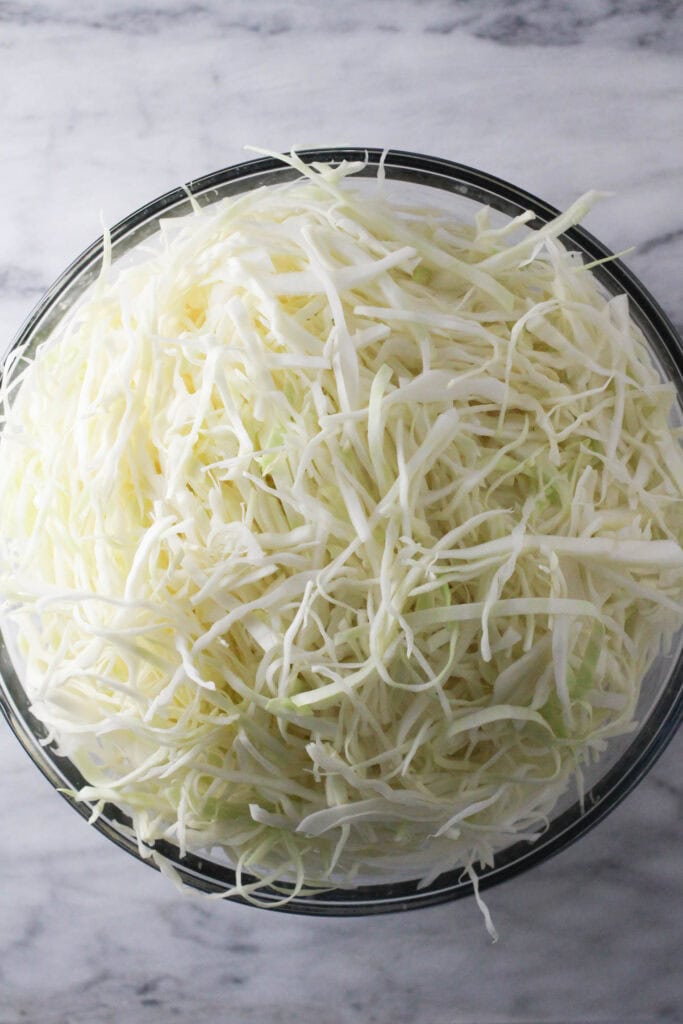
Place the shredded cabbage in a large bowl and sprinkle with salt.
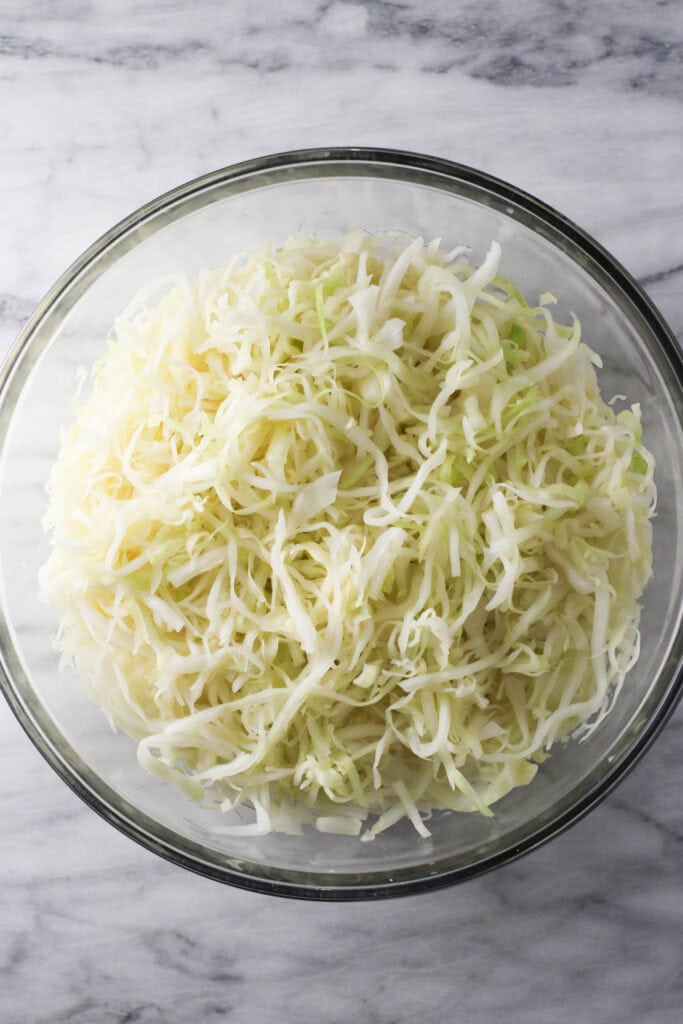
Massage the cabbage with your hands for 6-7 minutes, until it softens slightly, releasing some liquid while still retaining a bit of crunch. Let it sit for 5–10 minutes to draw out a little more moisture. Then, squeeze the cabbage and pour off the excess liquid.
Step 4: Add the aromatics and the dressing.
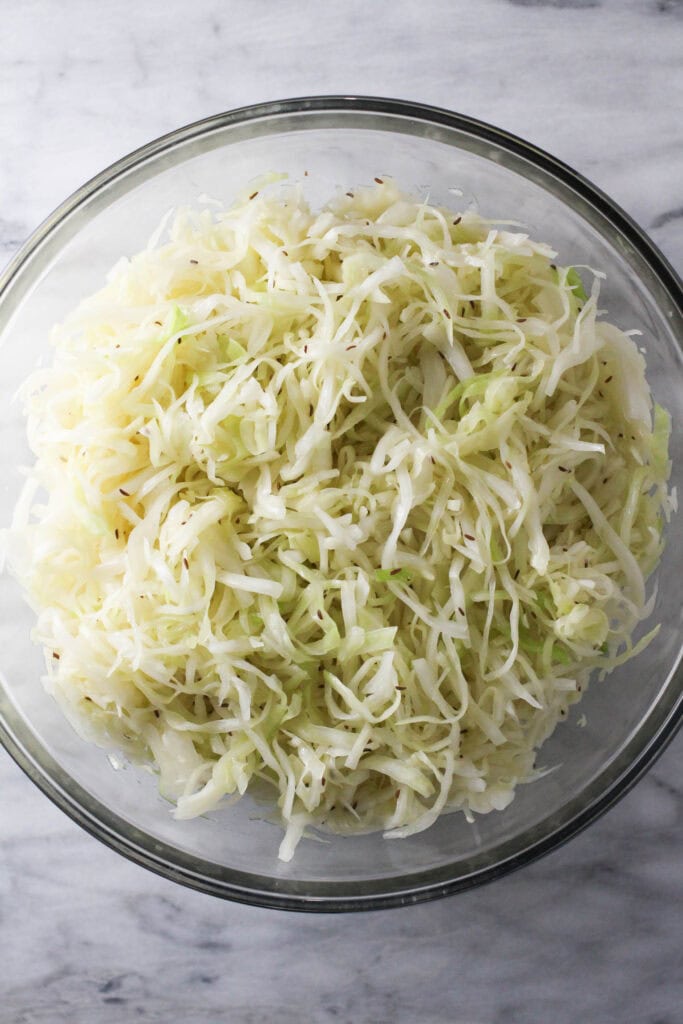
Add the chopped onions and caraway seeds to the bowl.
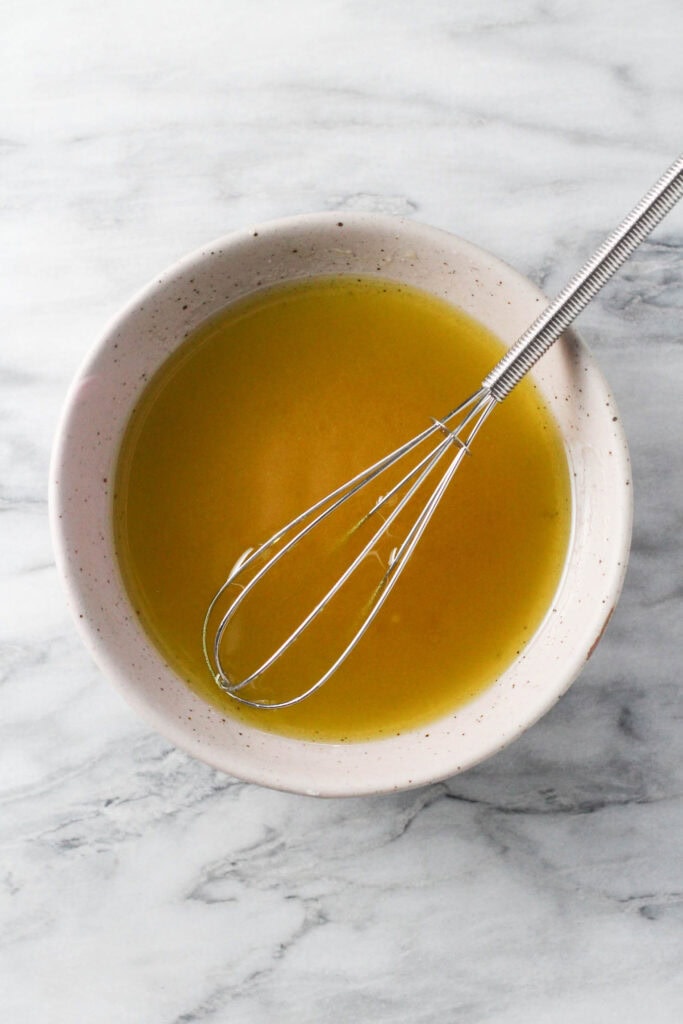
In a separate small bowl, whisk together the vinegar, oil, and sugar until fully emulsified, then pour the mixture over the salad and toss until thoroughly coated.
Step 5: Marinate.
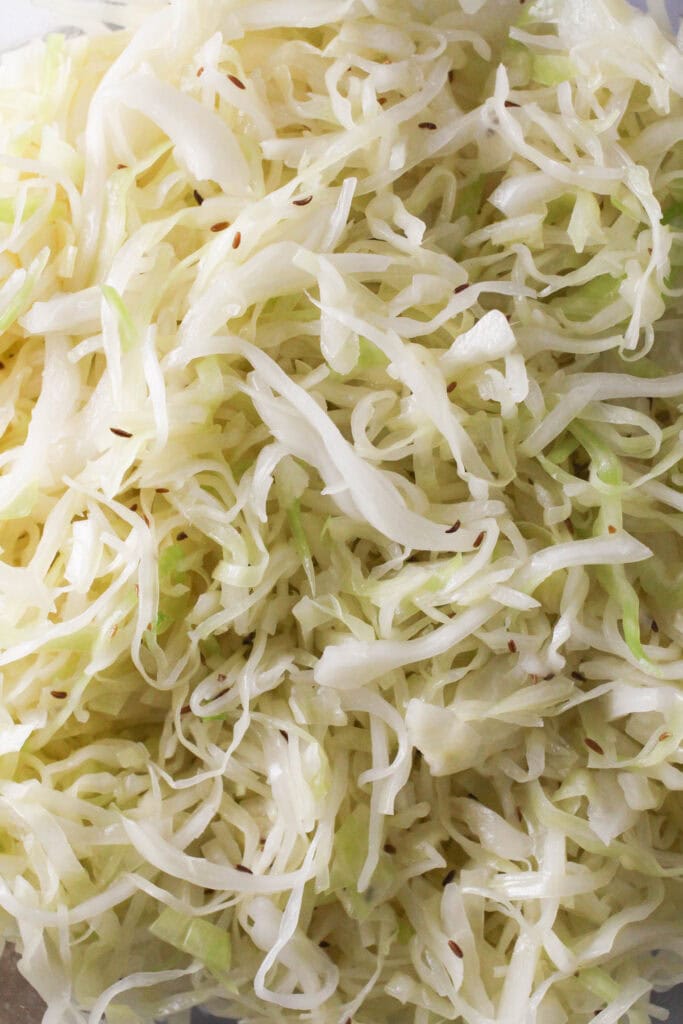
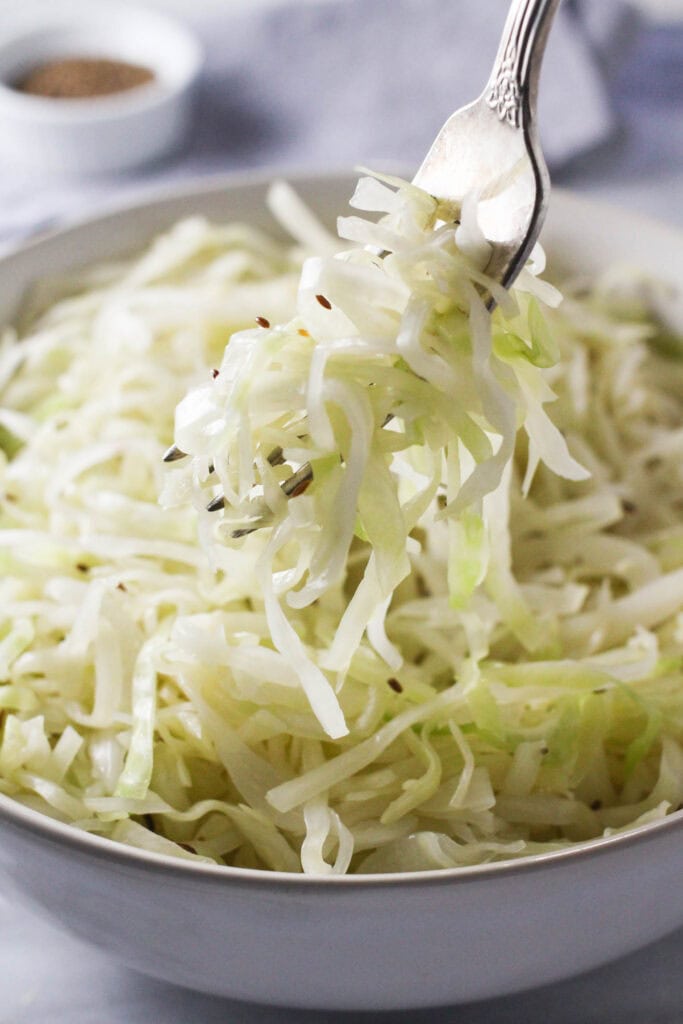
Cover and refrigerate for at least 30 minutes to allow the flavors to meld before serving.
Recipe Tips
Traditional Krautsalat relies on a few simple techniques that bring out the best in humble green cabbage:
- Remove the core – While the cabbage core is edible, it is far too woody for a delicate Krautsalat. For this recipe, we only want the most tender interior ribbons.
- Slice as thin as possible – Paper-thin shredded cabbage and sliced onions have more surface area to absorb the tangy dressing. While a large, sharp chef’s knife and a steady hand work just fine, don’t hesitate to use a mandoline or food processor if you have one.
- Massage like you mean it – Don’t be afraid to use your hands and really get in there to break down those tough cellulose fibers. You’ll know you’ve succeeded when the volume is reduced by about half and you have a puddle of raw cabbage juice at the bottom of the bowl.
- Drain thoroughly – To avoid a “soupy” slaw, drain the cabbage thoroughly after massaging. I like to grab a handful, give it a firm squeeze, then transfer the dry cabbage to a fresh bowl. In the end, the only liquid in the finished dish should be the dressing.
- Let it rest – Covering and refrigerating this dish for at least 30 minutes (ideally 2 to 4 hours) is the most important step. Unlike mayo-based slaws, which can get soggy as they sit, this one needs to rest to tenderize the leaves further, creating a flavor profile that sits perfectly between a fresh cabbage salad and a light sauerkraut.
Variations
While I’m a firm believer that Krautsalat is perfect in its most traditional form, it’s one of those recipes that can easily take on a few extra ingredients:
- Experiment with spices – If you find caraway’s earthy flavor too intense, celery seeds are a popular alternative. For a more “garden-fresh” profile, try tossing in a handful of chopped fresh dill or parsley.
- Add bacon (AKA Speck) – In many German kitchens, you’ll find smoky bacon in cabbage salads like this one. To do this, simply sauté diced bacon until crisp, then pour a tablespoon of the warm bacon drippings into your vinaigrette. Toss the crispy bits in just before serving.
- Swap the sugar for apples – If you want to skip the added sweetener entirely, you can actually grate a small, tart apple into the slaw! It’s a trick I use when I have lots of leftover apples.
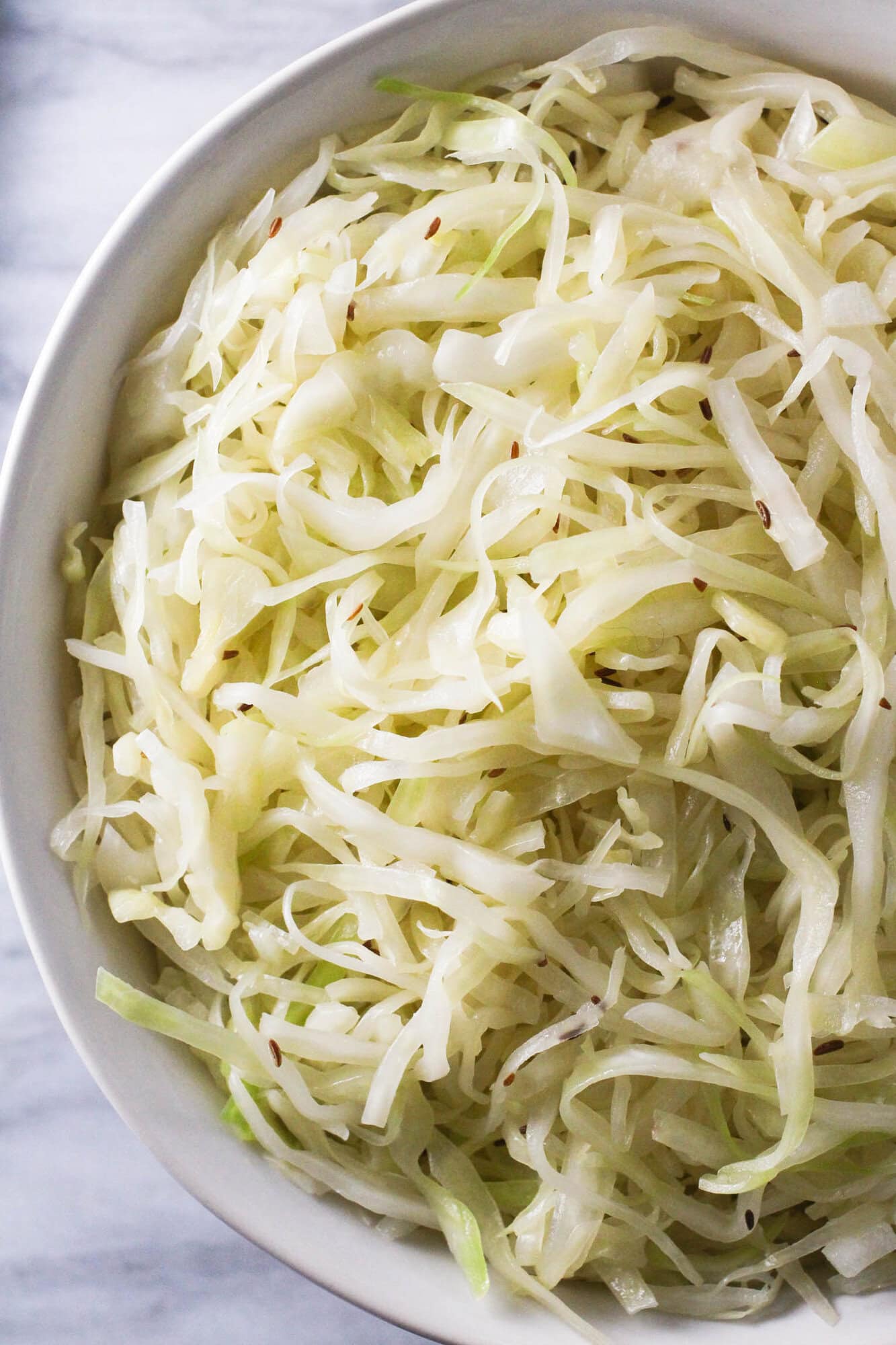
Serving Suggestions
While you can certainly serve it chilled, many German restaurants and gasthauses serve Krautsalat at room temperature as part of a Salatteller with crusty rye bread and several other types of marinated vegetables, such as shredded carrot salad, pickled radishes, and German cucumber salad.
It’s a wonderful way to enjoy a variety of gut-healthy vegetables in one sitting!
It also makes a great side dish for rich meat dishes such as pork roast, pork chops, grilled bratwurst, smoked sausages, or even a simple grilled chicken breast.
Storing
Storing: This is the ultimate meal-prep dish! Because there is no dairy, it stays fresh and crunchy in an airtight glass jar or container for 4 to 5 days, so don’t be afraid to make a big batch.
Freezing is not recommended.
Krautsalat FAQs
More Cabbage Recipes
Cabbage is simple, affordable, and incredibly versatile. From fresh salads to comforting classics, it adapts to every season and table. Here are more healthy recipes for you to try:
- Cabbage Cucumber Salad
- German Red Cabbage
- Red and Green Cabbage Salad
- Healthy Cabbage Salad (with a Simple Dressing)
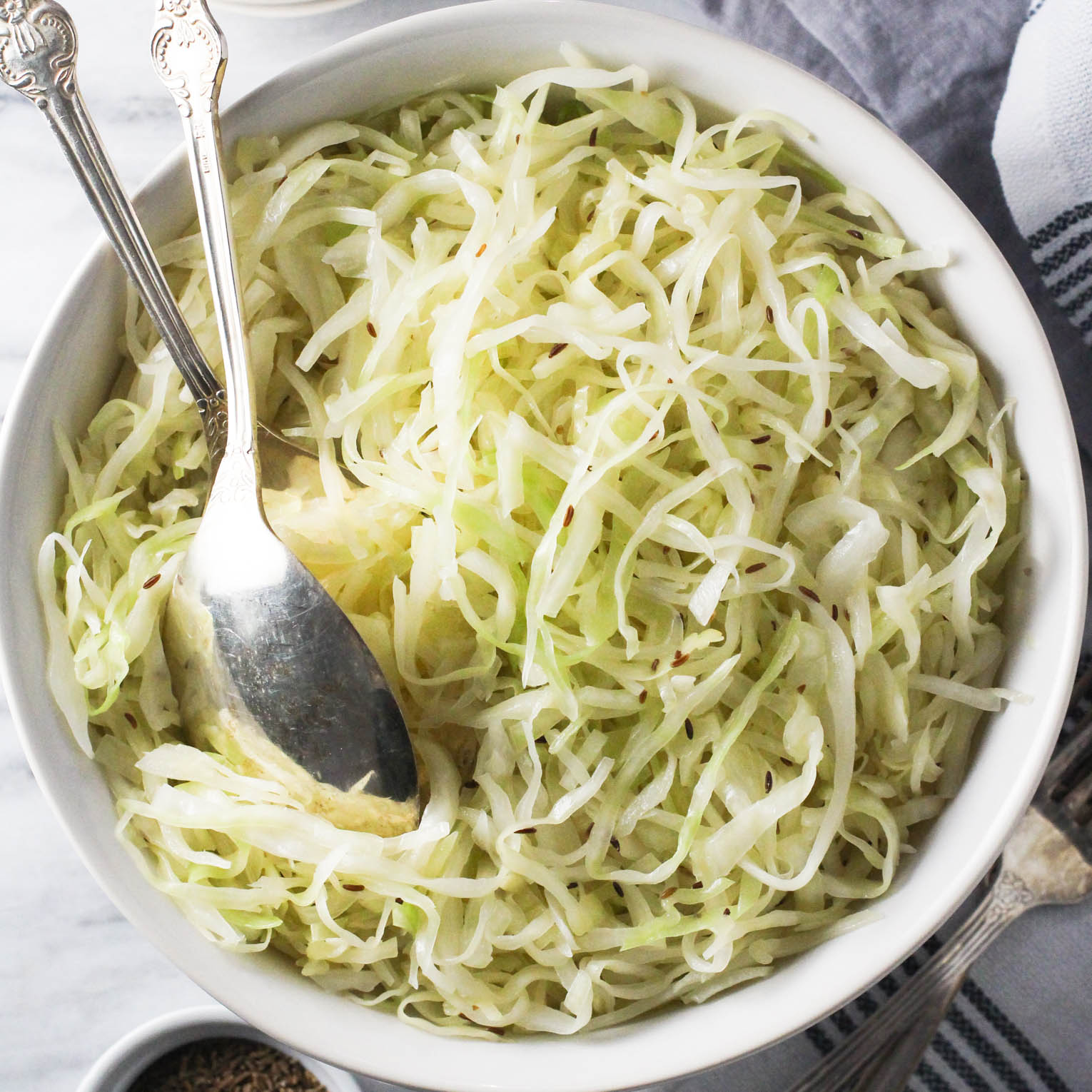
Krautsalat (German Cabbage Salad)
Ingredients
- 1 small cabbage (about 2 to 2½ pounds, very finely shredded)
- 2 tsp salt
- 1 small onion (thinly sliced)
- 1½ tsp caraway seeds
- 4 Tbsp white wine vinegar (or apple cider vinegar)
- 3 Tbsp neutral oil (sunflower oil, avocado oil or mild olive oil)
- 1 tsp sugar
Instructions
- Place the shredded cabbage in a large bowl and sprinkle with salt.1 small cabbage, 2 tsp salt
- Massage the cabbage with your hands for 6-7 minutes, until slightly softened and beginning to release liquid while still retaining some crunch.
- Let it sit for 5–10 minutes, then gently squeeze and pour off any excess liquid.
- Add the sliced onion and caraway seeds.1 small onion, 1½ tsp caraway seeds
- In a small bowl, whisk together the vinegar, oil, and sugar until combined.4 Tbsp white wine vinegar, 3 Tbsp neutral oil, 1 tsp sugar
- Pour the dressing over the cabbage and toss thoroughly to coat.
- Cover and refrigerate the salad for at least 30 minutes to allow the flavors to meld before serving.
Recipe Notes
Tips
- Remove the core: Use only the tender interior for the best texture.
- Slice thinly: Shred the cabbage and slice the onions thinly so they absorb the dressing better.
- Massage thoroughly: Break down fibers until the cabbage softens and releases some juice.
- Drain well: Squeeze out excess liquid to avoid a watery salad.
- Let it rest: Refrigerate for 30 minutes to a few hours for tender, flavorful cabbage salad.
Storing
- Store in an airtight container for 4–5 days. Freezing is not recommended.
The nutrition facts are an estimate. Variations in ingredient brands, portion sizes, or substitutions can affect the final nutritional values. For the most accurate information, please use a nutrition calculator or consult with a healthcare provider. Always ensure that each of the ingredients is allowed in your diet.

Meet Maria
Maria Ushakova is a holistic nutritionist and food blogger. She focuses on developing easy recipes using real food ingredients. She believes that healthy food is delicious and anyone can learn how to cook it. Maria’s work has appeared on numerous popular websites as well as in print.