
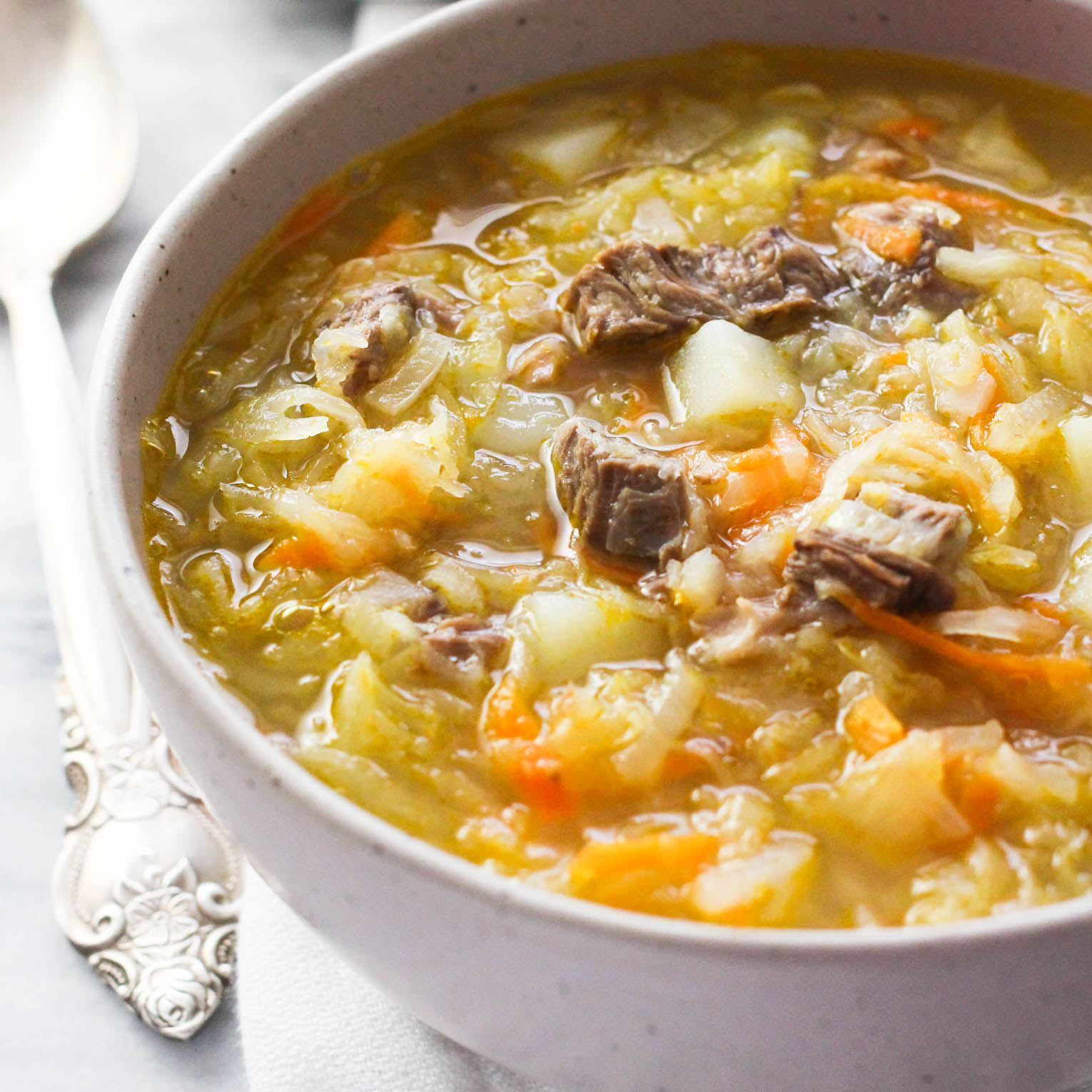
Learn how to make Sour Shchi (or кислые щи), a traditional Russian cabbage soup. This classic recipe combines rich, slowly simmered broth, tangy sauerkraut, and tender vegetables for a comforting soup full of depth and authentic old-world flavor.
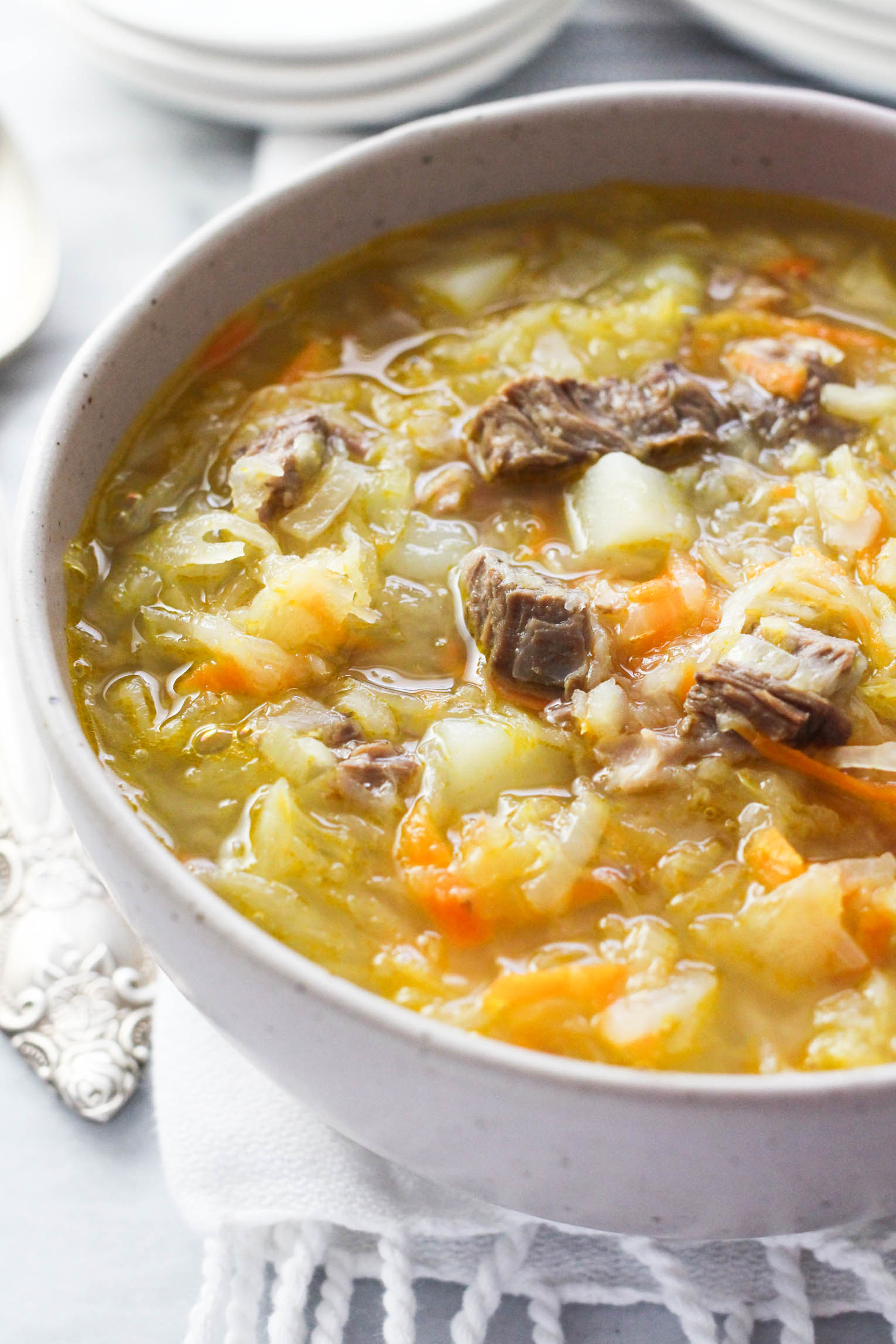
My kitchen is no stranger to soups like ukha (Russian fisherman’s soup), okroshka (Russian cold soup), and of course, borscht. But this Russian cabbage soup with sauerkraut (a.k.a. sour shchi) is one of my favorites.
Unlike many Western soups, shchi isn’t heavily seasoned or thickened. Instead, it relies on slow simmering and simple ingredients to build depth and character, a hallmark of traditional Russian cooking.
What is Shchi?
Shchi (pronounced “shchee”) or щи in Russian is one of Russia’s oldest and most beloved comfort foods. Traditionally made with slowly simmered cabbage, broth, and a few aromatics, it has been a staple in Russian kitchens for centuries.
There are two main types: “summer shchi,” made with fresh cabbage, and “sour shchi,” made with fermented cabbage (sauerkraut), which is what this recipe is. I love this version because the sauerkraut adds a signature tang that balances the rich broth, giving it a bright, bold flavor and unique acidity that fresh cabbage alone can’t replicate.
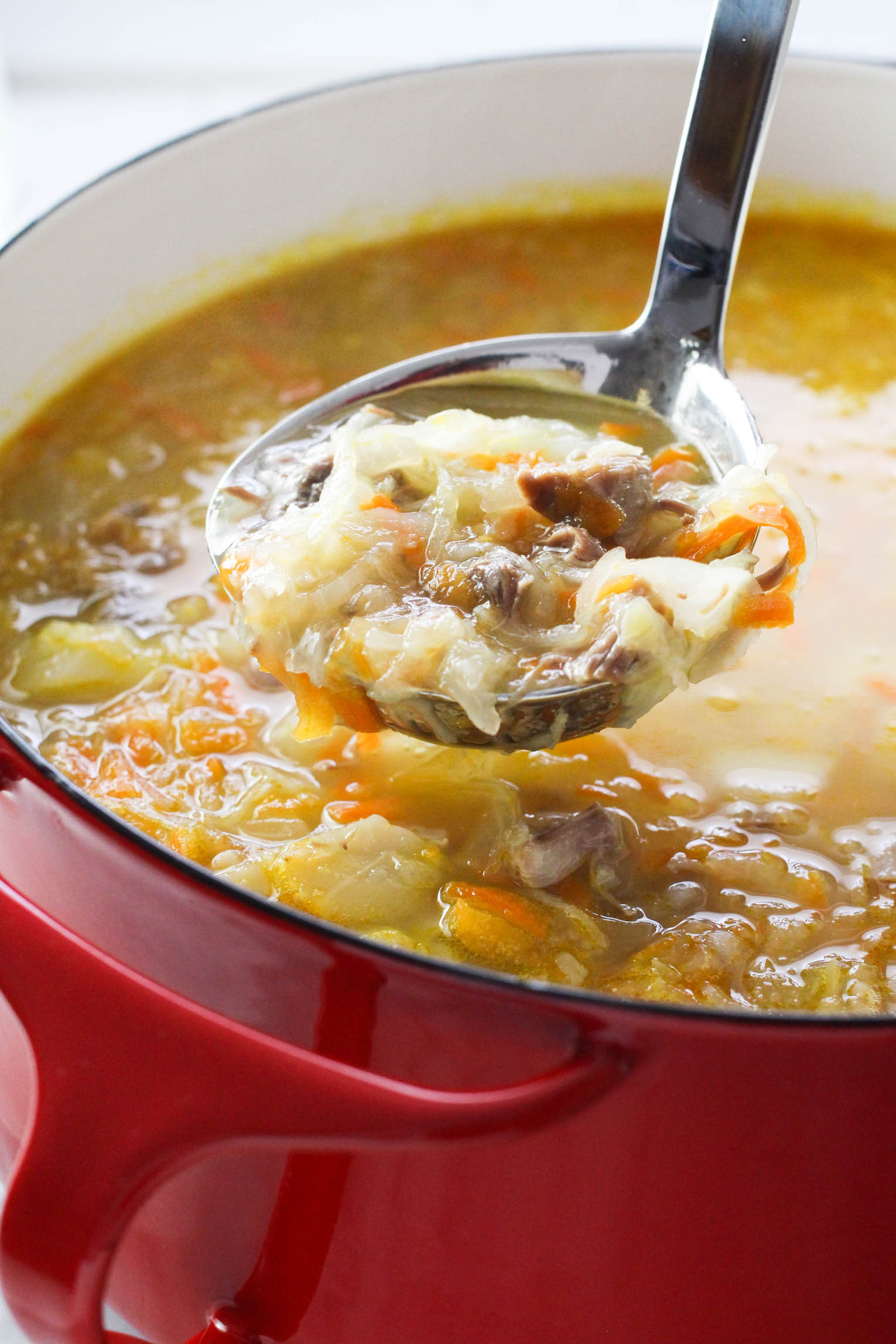
This hearty Russian cabbage soup with sauerkraut can be made with beef, pork, or chicken, or even as a vegetarian dish (postnye shchi or постные щи), and served hot with sour cream, fresh herbs, and hearty rye bread.
In this easy-to-follow recipe, I’ll show you how to make a truly authentic bowl, and it’s easier than you might think!
Shchi Ingredients
Here is everything you’ll need to make Russian shchi:
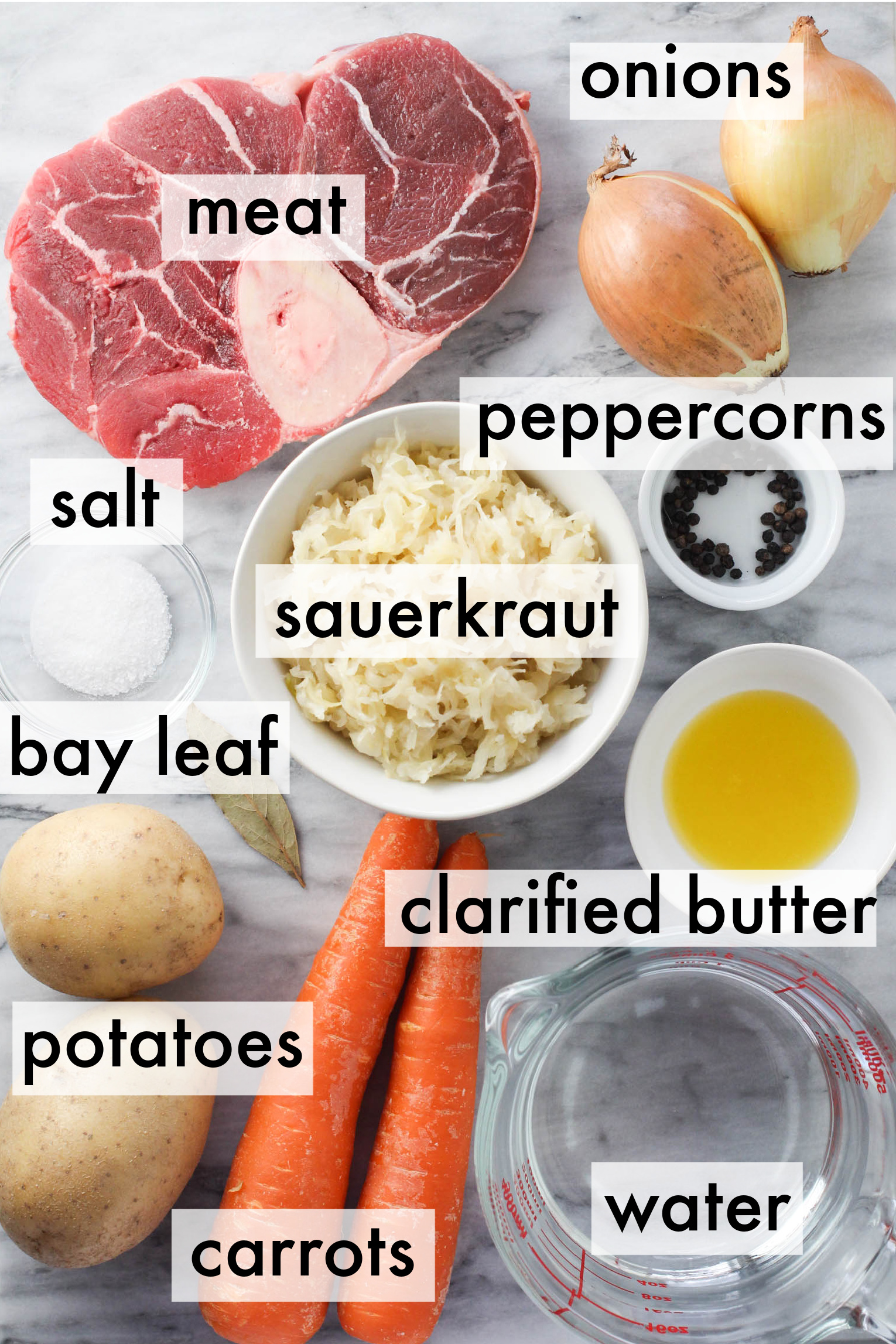
For the broth
A good pot of Russian shchi soup always begins with a clean, deeply flavorful broth using these ingredients:
- Beef or pork – I typically use a bone-in beef cut, such as shank, short ribs, or brisket, but bone-in pork shoulder or pork ribs are equally authentic. Boneless cuts will work in a pinch, but I highly recommend sticking with bone-in, as the bones add richness, body, and natural gelatin to the broth.
- Water – Beginning with cold, fresh water allows the flavors to extract slowly and evenly as the temperature rises, resulting in a more balanced broth.
- Aromatics – Onion, carrot, bay leaf, and black peppercorns infuse the broth with gentle complexity as it simmers. Since these are all used purely for flavor and will be discarded later, there’s no need to chop the vegetables meticulously or crush the whole spices.
- Salt – Since sauerkraut varies widely in saltiness, I salt the broth lightly at the beginning, then adjust later after adding the sauerkraut to avoid over-salting.
For the soup
Once the broth is ready, the following ingredients create the mouthwatering balance of sour, savory, and tender that defines this soup:
- Sauerkraut – A plain, naturally fermented homemade sauerkraut with a pleasantly tangy flavor is ideal, but jarred store-bought varieties can also work well if the ingredients are simple.
- Cooking fat – Russian cuisine favors clarified butter, beef tallow, or pork fat for sautéing, but mild olive oil or avocado oil is totally fine here, if preferred.
- Onions – For natural sweetness, yellow onions are the all-around best choice, but you can substitute white or even sweet onions in a pinch.
- Carrots – Grated carrots melt beautifully into the soup, adding subtle sweetness.
- Potatoes – Peeled and cubed potatoes make this a satisfying, stick-to-your-bones kind of dish. You can use any potato, but know that waxy varieties, like Yukon gold, yellow, or white, will hold their shape better than Russets, which tend to break down a bit more.
How to Make Shchi with Sauerkraut
The soul of this soup lies not just in its ingredients, but in the care you put into each step. Follow these instructions, and you’ll have a comforting Russian cabbage soup that tastes truly authentic:
Step 1: Make the broth.
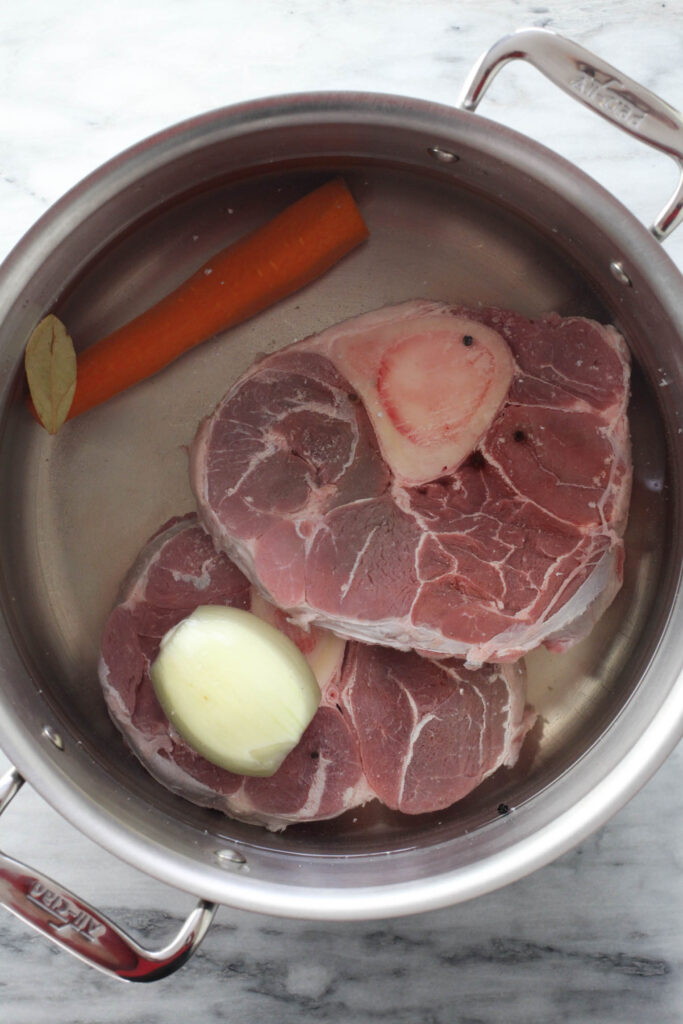
Start by placing the beef or pork in a large soup pot and cover with cold water. Add the salt, onion, carrot, bay leaf, and black peppercorns, and bring to a gentle boil. Skim off any foam that rises, then reduce the heat to low.
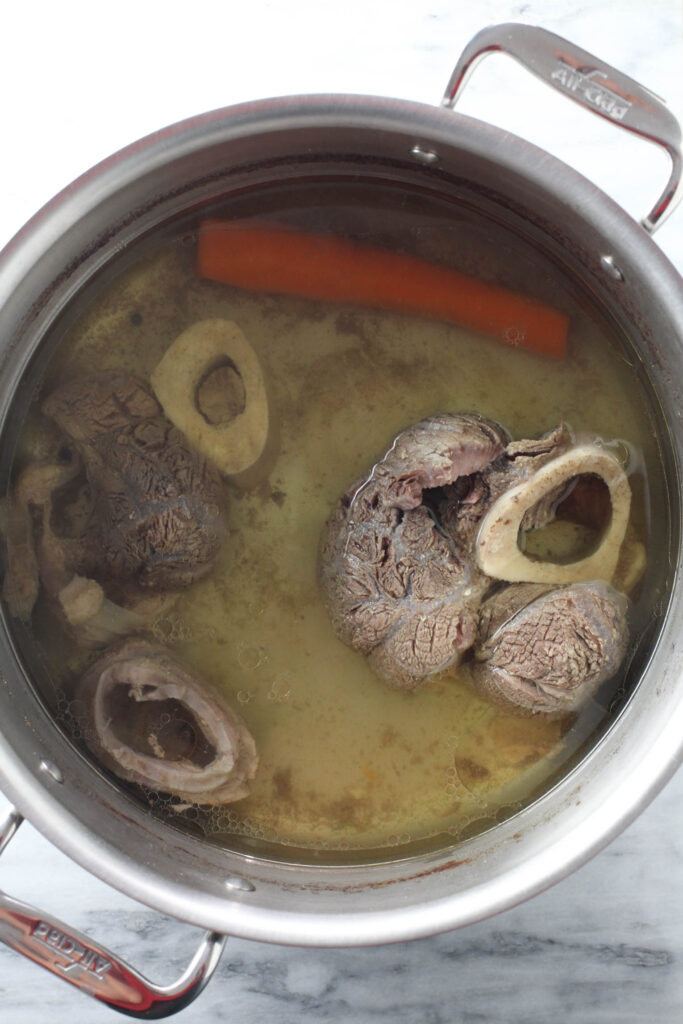
Partially cover and simmer until the meat is very tender (about 1½ hours for beef or 1 hour for pork). Remove the meat and set it aside. Discard the onion, carrot, bay leaf, and peppercorns. For a silky, clear broth, strain it if you like.
Step 2: Simmer the sauerkraut.
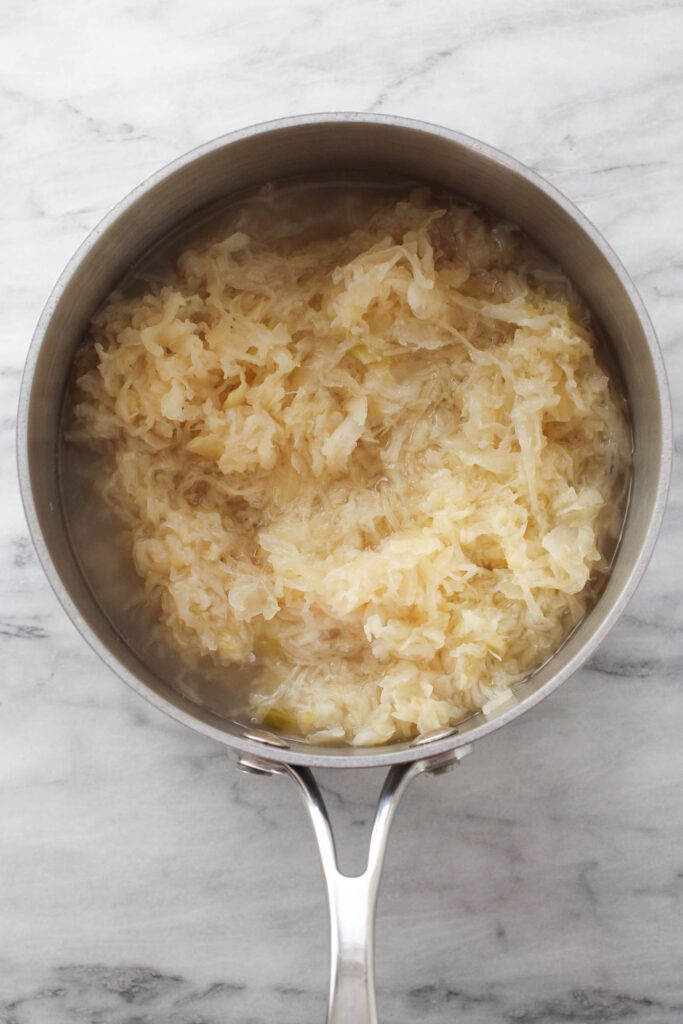
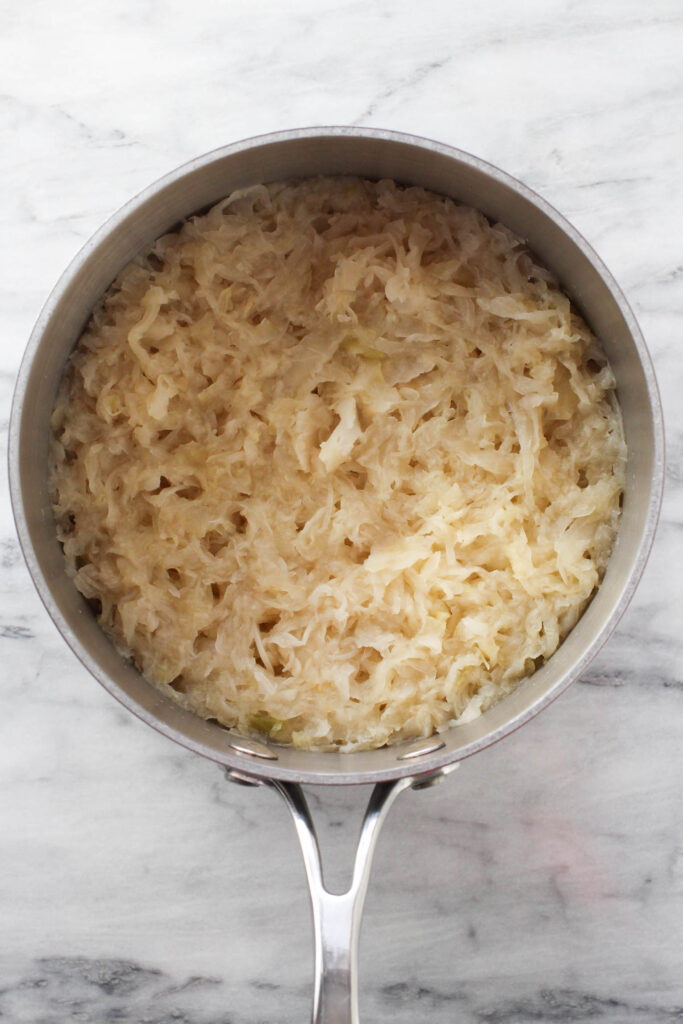
If your sauerkraut is particularly sour, give it a light rinse, then squeeze out any excess liquid, and chop it roughly. Then, place it in a saucepan with 1½ cups of water and bring to a gentle simmer. Reduce the heat, cover, and cook for 40 minutes.
Step 3: Sauté the onions & carrots.
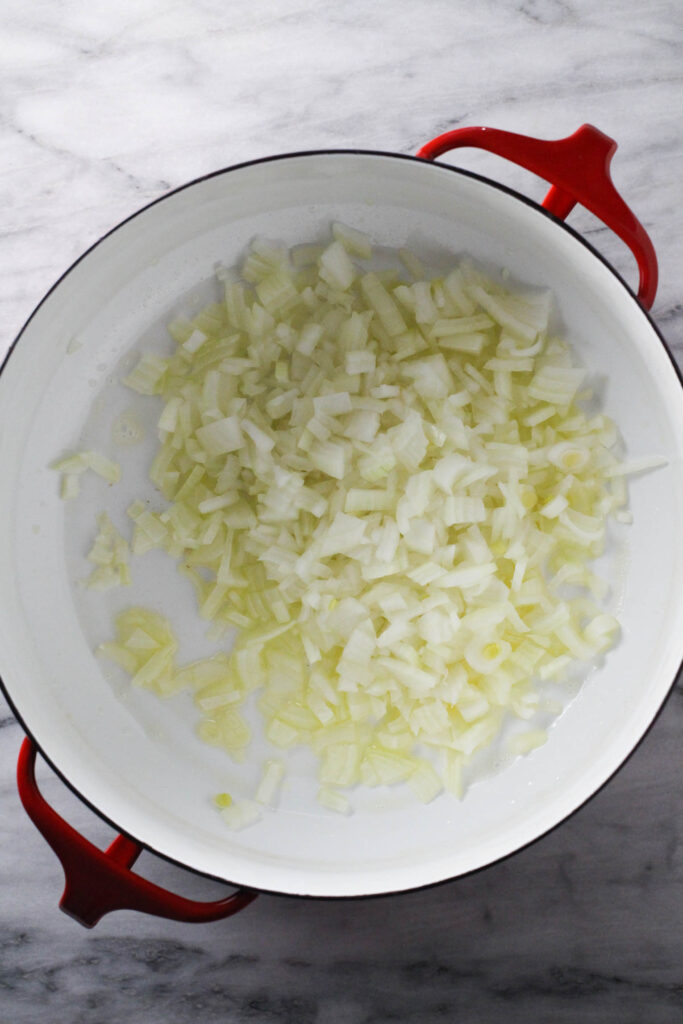
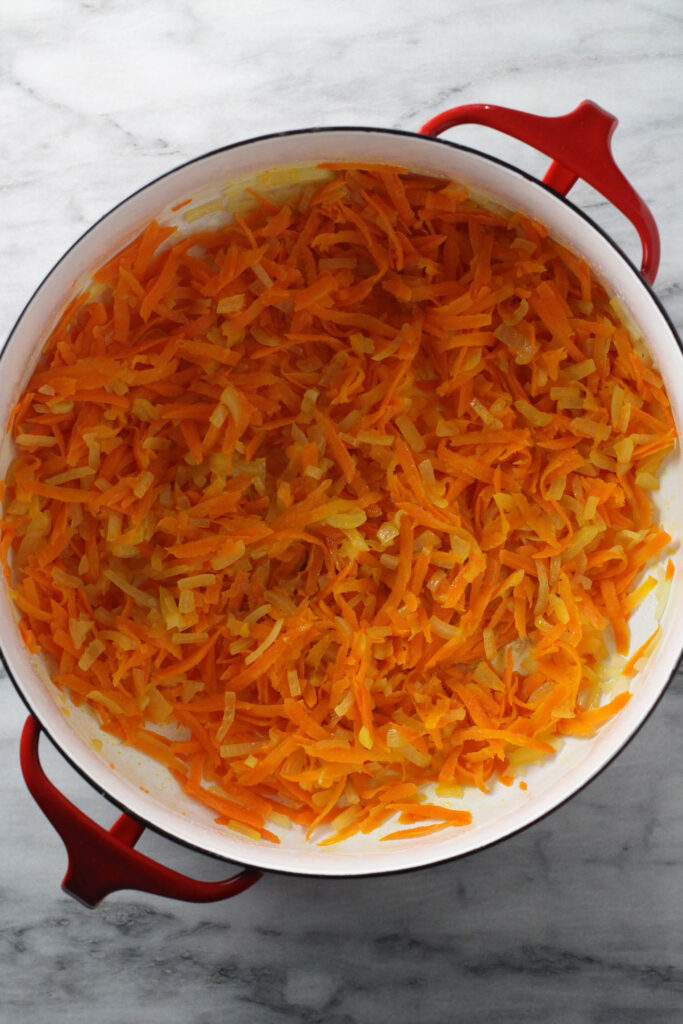
Heat the cooking fat in a soup pot or Dutch oven over low heat, then add the onions and cook for 3 to 5 minutes, stirring occasionally, until soft and translucent. Add the carrots and cook for another 2 to 3 minutes, just until slightly softened. Remove from the heat and set aside.
Step 4: Assemble the soup.
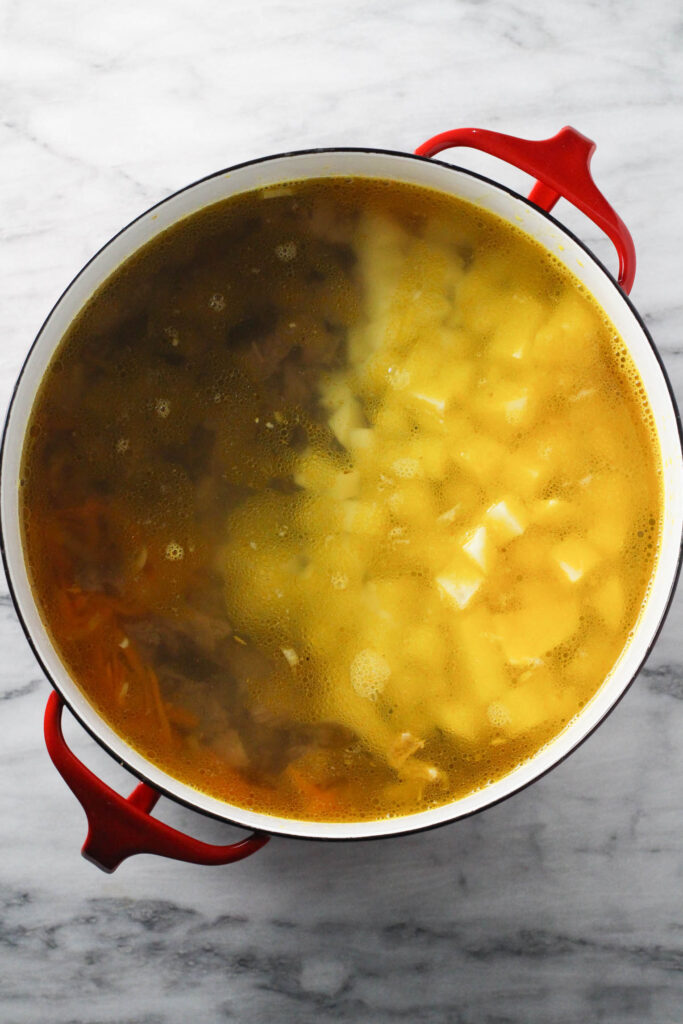
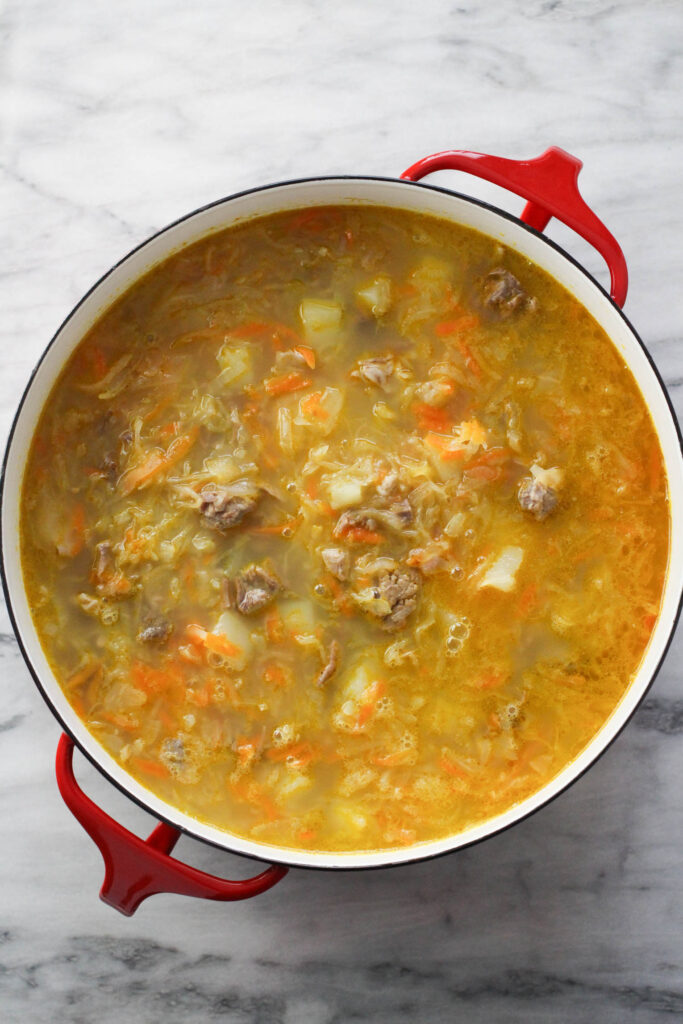
When the meat is cool enough to handle, remove it from the bones and cut it into bite-sized pieces. Add the potatoes, meat, and broth to the onion–carrot mixture, and bring to a gentle boil, then reduce the heat, cover, and simmer until the potatoes are just tender (15 to 20 minutes).
Stir in the simmered sauerkraut, taste, and adjust the salt as needed, then let it simmer gently for another 15 minutes. Turn off the heat and let the soup stand, covered, for 20 to 30 minutes before serving.
Recipe Tips
Keep these tips in mind, and you’ll end up with a delicious pot of sauerkraut soup true to its Russian roots:
- Taste your sauerkraut before using it – Sauerkraut varies in acidity and saltiness. If yours tastes overly sour or salty, rinse it and squeeze out any excess liquid before simmering.
- Simmer the sauerkraut separately – This step is especially important if you’re adding potatoes, as a highly acidic environment can prevent them from fully cooking. That said, if you’re skipping the potatoes, feel free to cook the sauerkraut directly in the broth.
- Avoid over-browning the vegetables – We’re aiming for a soft, sweet, and mellow base that balances the sauerkraut rather than competing with it, so keep the heat low when cooking your onions and carrots and don’t overdo it.
- Let the soup rest before serving – Letting the soup stand off the heat for 20 to 30 minutes, or even better, in the refrigerator overnight, lets the flavors deepen, mellow, and fully come together. Never skip this step!
Variations
One of the best things about making soup from scratch is the ability to adapt it to the season, what you have on hand, and your dietary needs, and this classic shchi recipe is no exception:
- Chicken shchi – If you prefer not to use beef or pork, consider making the broth with bone-in chicken thighs or drumsticks. Once tender, shred the meat from the bone before returning it to the soup.
- Vegetarian shchi – Replace the meat broth with a light vegetable broth, use olive or avocado oil to soften the vegetables, and bulk it up with extra onions, carrots, potatoes, and additional root veggies like parsnips or turnips, and maybe a small handful of dried porcini or other wild mushrooms.
- Fresh cabbage shchi – Instead of sauerkraut, add thinly sliced fresh green cabbage directly to the broth and simmer until tender. This version is milder, slightly sweet, and popular in the warmer months.
Storing
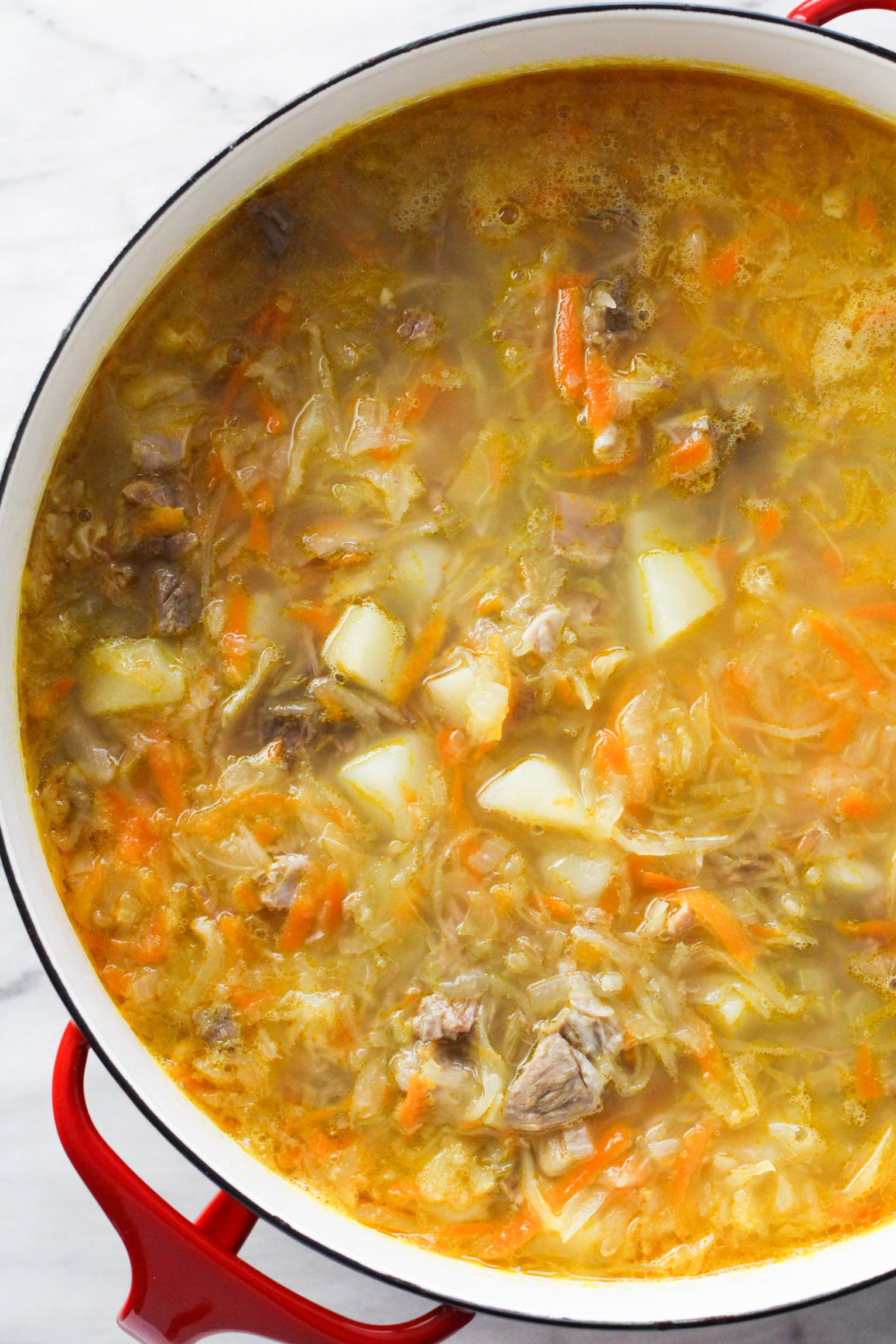
Storing: Shchi tastes even better the next day! To store, let it cool completely, then refrigerate it in an airtight container for 3 to 4 days. When you’re ready, reheat it gently on the stove, and enjoy a bowl that’s even better than the first.
Freezing: Let the soup cool completely, then freeze in airtight containers for up to 3 months. For best results, thaw overnight in the refrigerator before reheating on the stove.
FAQs
More Soup Recipes
Love this easy sour shchi recipe? Try these hearty and delicious soups next:
- Instant Pot Mushroom Barley Soup
- Canned Black Bean Soup
- Ground Turkey Soup
- Georgian Chicken Soup (Chikhirtma)
Shchi (Traditional Russian Sauerkraut Soup)
Ingredients
For the Broth
- 1½-2 pounds beef or pork (beef shank, short ribs, brisket or pork shoulder, pork ribs)
- 3 quarts (2.84 L) water
- 1 tsp salt (adjust at the end)
- 1 onion
- 1 carrot (peeled)
- 1 bay leaf
- 6 black peppercorns
For the Shchi
- 1 pound sauerkraut (about 2½ cups)
- 1½ cup water
- 1½ Tbsp clarified butter (or ghee, beef tallow, mild olive or avocado oil)
- 2 medium onions (thinly sliced)
- 2 medium carrots (grated)
- 3 medium potatoes (peeled and cut into ½-inch cubes)
Instructions
Make the broth:
- Place the beef or pork in a large pot and cover with cold water. Add the salt, onion, carrot, bay leaf, and black peppercorns.1½-2 pounds beef or pork, 3 quarts water, 1 tsp salt, 1 onion, 1 carrot, 1 bay leaf, 6 black peppercorns
- Bring to a gentle boil, skim off any foam, then reduce the heat to low.
- Partially cover and simmer until the meat is very tender: beef for about 1½ hours; pork for about 1 hour.
- Remove the meat and set aside. Discard the onion, carrot, bay leaf, and peppercorns. Strain the broth if desired.
Simmer the sauerkraut:
- If the sauerkraut is very sour, rinse it lightly and squeeze out excess liquid. Chop if needed.1 pound sauerkraut
- Place the sauerkraut in a saucepan with 1½ cups of water. Bring to a simmer, reduce the heat, cover, and cook for 40 minutes.
Cook the onions and carrots:
- Heat the fat in a pot over low heat. Add the onions and cook, stirring occasionally, until soft and translucent, about 3–5 minutes (do not brown).1½ Tbsp clarified butter, 2 medium onions
- Add the carrots and cook for 2–3 minutes, until slightly softened. Remove from heat and set aside.2 medium carrots
Assemble the soup:
- When the meat is cool enough to handle, remove it from the bones and cut into bite-sized pieces.
- Add the potatoes, meat, and broth to the onion–carrot mixture. Bring to a gentle boil, then reduce the heat, cover, and simmer for 15–20 minutes, until the potatoes are fully cooked.3 medium potatoes
- Add the simmered sauerkraut to the soup. Stir, taste, and adjust salt if needed. Simmer for 15 more minutes.
- Turn off the heat and let the soup stand, covered, for 20–30 minutes before serving.
Serve:
- Serve hot. Traditionally, shchi is served with sour cream, fresh herbs, and rye bread. Shchi tastes even better the next day.
Recipe Notes
Tips
- Taste the sauerkraut: It varies in saltiness and acidity. If your sauerkraut is too sour or salty, rinse and squeeze out excess liquid before cooking. If the saurkraut strands are too long, chop them.
- Simmer sauerkraut separately: Especially if using potatoes, as acidity can prevent them from softening properly. If skipping potatoes, you can cook it directly in the broth.
- Don’t over-brown the vegetables: Keep the heat low so the onions and carrots become soft and sweet, not deeply browned.
- Let it rest: Allow the soup to stand 20–30 minutes (or overnight in the fridge) for the best flavor.
Storing
- Storing: Shchi tastes even better the next day. Let it cool completely, then refrigerate in an airtight container for up to 4 days. Reheat gently on the stove before serving.
- Freezing: Cool completely, then freeze in airtight containers for up to 3 months. Thaw overnight in the refrigerator and reheat on the stove.
The nutrition facts are an estimate. Variations in ingredient brands, portion sizes, or substitutions can affect the final nutritional values. For the most accurate information, please use a nutrition calculator or consult with a healthcare provider. Always ensure that each of the ingredients is allowed in your diet.

Meet Maria
Maria Ushakova is a holistic nutritionist and food blogger. She focuses on developing easy recipes using real food ingredients. She believes that healthy food is delicious and anyone can learn how to cook it. Maria’s work has appeared on numerous popular websites as well as in print.



Was really tasty.